
Designing Decision Ownership for AI Without Losing Control
A decision ownership framework for AI helps businesses automate faster without sacrificing accountability, governance, or strategic control. Discover how redesigning decision architecture—not simply implementing AI—creates stronger systems, reduces founder dependency, and builds predictable, scalable business growth.
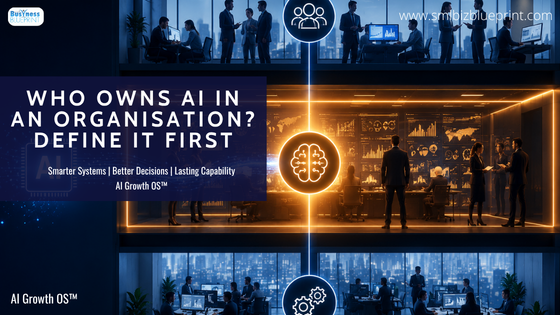
Who Owns AI in an Organisation? Define It First
Who owns AI in an organisation? The answer isn’t IT or an innovation team—it’s the leaders responsible for the business decisions AI influences. Discover why clear ownership, accountability, and decision architecture matter more than AI adoption if you want to turn artificial intelligence into a lasting competitive advantage.

How to Remove Decision Bottlenecks With AI
AI isn’t the reason your business still depends on you—it’s exposing why it always has. Discover how removing decision bottlenecks with AI requires redesigning decision architecture, not just automating tasks, so your business can scale capability instead of founder dependency.
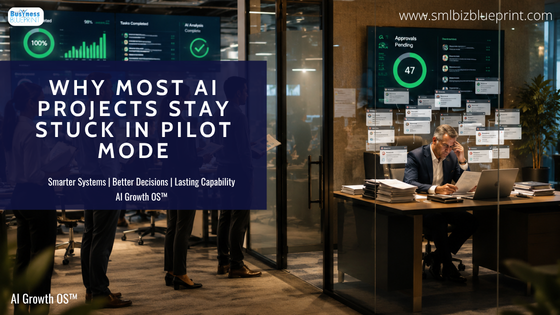
Why Most AI Projects Stay Stuck in Pilot Mode
Most AI projects don’t fail because of poor technology—they fail because businesses never redesign the operating model around it. Discover why moving AI from pilot to production is really about building organisational judgement, creating repeatable decision systems, and turning learning into long-term competitive advantage.
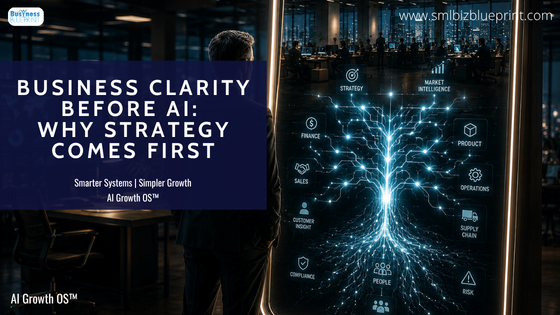
Business Clarity Before AI: Why Strategy Comes First
Most businesses don’t have an AI problem—they have a business clarity problem. Discover why successful AI adoption starts with decision architecture, not technology, and how building business clarity before AI creates scalable growth, consistent decisions, and long-term competitive advantage.