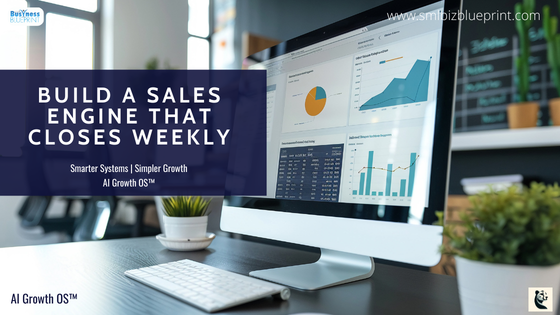

A weekly sales closing system replaces unpredictable revenue with structured progression, automated follow-up, and measurable pipeline control.
Instead of chasing more leads, you stabilise the close rate, shorten the sales cycle length, and increase forecast accuracy through defined stage criteria and a consistent weekly sales cadence.
When sales runs on process instead of motivation, revenue becomes predictable — and leadership regains control.
A step-by-step framework to design a weekly closing system that reduces volatility and protects predictable revenue.
You’re generating leads.
You’re having conversations.
You’re sending proposals.
And yet… revenue still feels unpredictable.
Some months look strong.
Others stall.
Deals sit in your sales pipeline longer than they should.
Follow-ups slip.
Forecasts feel like educated guesses.
So when numbers dip, the instinct is immediate:
Push harder.
Launch another campaign.
Chase more leads.
But here’s the tension you’re living with:
You’re doing the work — and the results still don’t feel controlled.
That’s not just frustrating.
It’s destabilising.
When revenue is inconsistent, everything tightens.
Hiring decisions pause.
Investments feel risky.
Pricing confidence softens.
You start operating cautiously instead of strategically.
The pressure doesn’t just sit in sales — it leaks into leadership.
Most advice tells you to increase volume.
More leads.
More outreach.
More activity.
But what if the problem isn’t lead generation at all?
What if the real issue is the absence of a structured sales closing system — a predictable sales process that runs every week whether you feel motivated or not?
Here’s the uncomfortable truth:
Chasing leads is usually a response to uncertainty.
And uncertainty in sales is almost always a systems failure.
In this article, we’ll dismantle the default approach and replace it with a better lens:
Why getting more leads rarely fixes inconsistent revenue
What a weekly sales cadence actually looks like
How to automate sales follow-up without losing control
The metrics that make forecasting accurate instead of hopeful
And how to build a sales closing system that stabilises growth
Because this isn’t about selling harder.
It’s about reducing volatility.
Midway through building any serious business, there’s a shift.
You stop wanting momentum.
You start wanting control.
You’re not trying to “close more deals.”
You’re trying to build a machine that closes consistently.
On the other side of this isn’t hustle.
It’s clarity.
Imagine reviewing your pipeline and knowing — with grounded confidence — what’s likely to close and when.
Imagine revenue feeling measured instead of emotional.
Imagine a weekly system that moves deals forward automatically.
That’s what a structured, automated, weekly closing system creates.
Not more noise.
Not more pressure.
More certainty.
Let’s break it down properly.
Why You’re Getting Leads — But Not Closing Sales
You don’t have a lead problem.
You have a deal progression problem.
That’s the friction most businesses refuse to name.
Leads are coming in.
Meetings are happening.
Proposals are being sent.
Yet your close rate fluctuates, your sales pipeline feels bloated, and your revenue doesn’t move with the consistency it should.
The frustration isn’t effort.
It’s unpredictability.
And unpredictability creates pressure.
What most people don’t realize is this:
A lead is not revenue.
A lead is unresolved uncertainty.
Until that uncertainty is reduced through structured progression, that opportunity is fragile.
Most deals don’t die from rejection — they decay from inaction.
The longer this stays the same, the more silent losses accumulate in your pipeline.
Research across B2B sales environments consistently shows that a significant percentage of CRM opportunities stall indefinitely.
Not because the buyer said “no.”
But because there was no enforced next step, no decision timeline, no structured follow-up cadence.
Here’s the logic:
If there is no scheduled next action, the deal is drifting.
If there is no qualification gate, the pipeline is inflated.
If there is no weekly review, stagnation is invisible.
If there is no automated sales follow up, deals decay quietly.
And decay is expensive.
Every stalled deal consumes cognitive bandwidth.
It clutters forecasting.
It creates false confidence.
It delays resource decisions.
What that means for your business is simple:
You are making strategic decisions based on probabilities you haven’t controlled.
That’s not a selling issue.
That’s a systems issue.
The real issue is unmanaged progression through your sales closing system.
A sales closing system is not persuasion.
It is progression.
Most pipelines track activity (“call made,” “proposal sent”).
High-functioning systems track movement (“decision scheduled,” “stakeholder alignment confirmed,” “budget validated”).
Without defined stage exit criteria, deals move forward on optimism rather than evidence.
For example:
If “Proposal Sent” is a stage, what must happen for a deal to enter it?
Budget confirmed?
Decision authority identified?
Timeline agreed?
Evaluation criteria defined?
If those conditions aren’t enforced, your pipeline is full of maybes dressed as momentum.
This is where close rates quietly erode.
You feel like you’re working.
But the system isn’t advancing.
Relief comes from structure, not more leads.
The solution is not to generate more opportunities.
It is to reduce friction inside your existing pipeline.
When every stage has:
Clear entry criteria
Clear exit criteria
Required next action
Scheduled follow-up
Deal movement becomes measurable.
That’s the shift from reactive selling to operational control.
Midway through building a serious business, there’s a moment of identity change:
You stop chasing opportunity.
You start engineering outcomes.
That’s the difference between being busy in sales and building a predictable sales process.
Most close-rate problems are qualification problems in disguise.
The earlier uncertainty is removed, the higher your conversion rate becomes.
Loose qualification inflates your sales pipeline but depresses your win rate.
It feels productive because the pipeline looks large.
But it’s unstable.
Tight qualification reduces pipeline size but increases forecast reliability.
This feels counterintuitive — until you experience it.
A smaller, well-qualified pipeline with defined progression will outperform a bloated, loosely managed one every time.
The longer this stays the same, the more time your team spends nurturing deals that were never real.
That’s time you don’t get back.
If your pipeline depends on memory, it’s leaking revenue.
Manual follow-up creates inconsistency.
Inconsistency creates decay.
Decay creates unpredictability.
An automated sales follow-up structure ensures:
Every lead receives the same disciplined cadence.
Every proposal triggers reminders.
Every stalled deal gets flagged.
Every opportunity has visibility.
This doesn’t remove human judgment.
It removes human forgetfulness.
You don’t need more motivation.
You need enforced movement.
Every month you delay installing structure, revenue variance compounds.
Every week you rely on memory, opportunities disappear silently.
The cost isn’t just missed deals.
It’s distorted forecasting, delayed hiring, and conservative decision-making driven by incomplete visibility.
Pro Tip
Audit your current pipeline and define one non-negotiable exit criterion for each stage this week.
Do not allow deals to advance without it.
Because the real edge isn’t more conversations — it’s reduced uncertainty.
The faster you eliminate ambiguity from your pipeline, the faster revenue becomes predictable.
And predictability is power.
How Do I Stop Chasing Leads All the Time?
You chase leads because you don’t trust your pipeline.
That’s the frustration underneath the surface.
When revenue feels unpredictable, the instinct is to create more activity.
More outreach.
More campaigns.
More top-of-funnel pressure.
It feels responsible.
It feels proactive.
But it’s usually reactive.
The longer this stays the same, the more your business becomes addicted to spikes instead of stability.
Chasing leads is a symptom of forecast fog.
When you cannot confidently predict what will close next month, your default move is volume.
You try to overwhelm uncertainty with more input.
That’s understandable — but strategically flawed.
Here’s the logic:
If your close rate is unstable, more leads amplify instability.
If your sales cycle is unmanaged, more deals increase congestion.
If your follow-up cadence is inconsistent, more opportunities accelerate decay.
If qualification standards are loose, pipeline growth hides conversion weakness.
What that means for your business is simple:
You’re increasing pressure on a system that hasn’t been stabilised.
More water through a cracked pipe doesn’t increase flow.
It increases leakage.
Revenue volatility is usually a systems failure, not a demand failure.
Most people don’t realize this:
Predictable revenue is not created by volume.
It’s created by conversion consistency.
A predictable sales process begins with understanding that sales is not a creative event — it’s an operational system.
And operational systems must be measured and reviewed rhythmically.
Without a structured weekly sales cadence, pipeline health becomes anecdotal.
You “feel” busy.
You “think” deals are progressing.
You “hope” next month looks strong.
Hope is not a forecasting strategy.
The solution is not more leads — it’s a weekly control mechanism.
Relief begins when you stop asking, “How do I get more leads?” and start asking, “How do I control deal movement?”
A weekly sales cadence creates that control.
At a minimum, this cadence should include:
Stage-by-stage pipeline review
Stalled deal identification
Follow-up compliance tracking
Conversion rate monitoring
Sales velocity awareness
Qualification enforcement
This is not micromanagement.
It’s operational hygiene.
When this cadence is consistent, chasing decreases naturally — because visibility increases.
Midway through building a serious company, there’s a shift in identity:
You stop trying to create urgency.
You start engineering certainty.
That’s when sales transforms from emotional to mechanical.
A weekly sales cadence reduces anxiety because it reduces ambiguity.
The real emotional cost of chasing leads is not workload.
It’s cognitive noise.
When you don’t know:
Which deals are real
Which proposals are alive
Which stakeholders are engaged
Which timelines are firm
Your brain compensates with urgency.
But urgency creates short-term bursts, not long-term flow.
A weekly cadence forces clarity:
Every deal must have a next step.
Every stage must have evidence.
Every opportunity must justify its position.
Every forecast must reflect reality.
And clarity reduces anxiety.
Most revenue swings originate from invisible stagnation.
Here’s the pattern:
Month 1: Pipeline looks strong.
Month 2: Close rate dips slightly.
Month 3: Several deals stall.
Month 4: Revenue drops suddenly.
The drop didn’t happen in Month 4.
It happened quietly in Month 2.
Without a weekly review mechanism, stagnation hides.
And hidden stagnation is expensive.
Every week this stays manual and unscheduled, you lose opportunities you never even notice.
Chasing leads trains your team to operate reactively.
When leadership constantly pushes for new leads, the signal sent is:
“Top of funnel is the problem.”
Even when it isn’t.
That misalignment distorts behavior:
Sales reps focus on acquisition, not advancement.
Marketing increases volume without improving quality.
Qualification weakens.
Forecast accuracy deteriorates.
Pricing discipline softens under pressure.
What that means for your business is compounding inefficiency.
A weekly sales closing system corrects this signal.
It says:
“Movement matters more than volume.”
Every quarter you delay installing a structured weekly cadence, volatility compounds.
Every month you rely on activity instead of review, forecasting weakens.
The cost is not just missed deals — it’s strategic hesitation driven by incomplete visibility.
If revenue unpredictability is draining leadership focus, this is the lever.
Pro Tip
Block 45 minutes every week for a non-negotiable pipeline review.
No rescheduling.
No delegation.
Every deal must be discussed against defined stage criteria.
Because cadence creates control.
And control creates confidence.
The longer you rely on momentum instead of mechanism, the more your business depends on urgency to survive.
Install rhythm — and urgency fades.
What Is a Sales Closing System (Really)?
A sales closing system is not about persuasion — it’s about enforced progression.
That’s the shift most businesses haven’t made.
When deals stall, the instinct is to improve scripts, sharpen pitches, or train objection handling.
But the real issue is rarely conversational skill.
It’s structural drift.
The frustration isn’t that you can’t sell.
It’s that deals move inconsistently.
And inconsistency is expensive.
If progression isn’t defined, it’s accidental.
Most people don’t realise this:
A CRM pipeline without strict stage criteria is just a digital to-do list.
“Discovery.”
“Proposal Sent.”
“Negotiation.”
These labels feel structured.
But unless each stage has clear entry and exit rules, they are cosmetic.
A true sales closing system defines:
What must be confirmed before a deal advances
What evidence validates buyer intent
What action must be scheduled next
What disqualifies an opportunity
Without this structure, advancement is based on optimism, not proof.
What that means for your business is distorted forecasting and inflated pipeline value.
A closing system replaces memory with mechanism.
Friction builds when deal movement depends on individual effort.
One rep follows up diligently.
Another forgets.
One proposal gets chased.
Another sits untouched.
Manual sales management creates variability.
Variability creates volatility.
A real closing system installs:
Automated follow-up triggers
Required next meetings before stage progression
Time-in-stage limits
Weekly pipeline review cadence
Deal health visibility
This transforms sales from an event-driven function into an operational rhythm.
Relief doesn’t come from better motivation.
It comes from fewer blind spots.
A predictable sales process enforces momentum.
The goal of a closing system is not to “close harder.”
It’s to reduce uncertainty at every stage.
Each stage should answer one question:
Is there confirmed budget?
Is there decision authority?
Is there timeline alignment?
Is there defined problem urgency?
Is there stakeholder buy-in?
If those elements are unclear, the deal isn’t progressing.
It’s lingering.
Lingering deals create false confidence.
False confidence creates forecasting errors.
The longer this stays the same, the more your pipeline becomes a psychological comfort blanket instead of a strategic tool.
A closing system protects leadership clarity.
Here’s the overlooked consequence:
Sales inconsistency distorts executive decision-making.
When your sales pipeline isn’t governed by a structured closing system:
Revenue forecasts fluctuate.
Hiring slows.
Pricing becomes reactive.
Investment timing weakens.
Strategic planning compresses.
Volatility doesn’t just affect sales.
It affects posture.
Midway through scaling, there’s an identity shift:
You stop seeing sales as persuasion.
You start seeing it as infrastructure.
Infrastructure is not emotional.
It’s engineered.
The weekly cadence is the spine of the system.
Without a weekly review mechanism, structure decays.
A sales closing system must include:
Stage-by-stage opportunity review
Identification of stalled deals
Enforced exit criteria validation
Pipeline coverage monitoring
Follow-up compliance tracking
This is not about micromanagement.
It’s about consistency.
Consistency reduces surprise.
Reduced surprise increases control.
Control builds confidence.
A closing system shrinks your pipeline — and strengthens your business.
This sounds counterintuitive.
When you install strict qualification and progression rules, pipeline volume often drops.
Deals that don’t meet criteria are removed or recycled.
That can feel uncomfortable.
But what replaces volume is reliability.
A lean, well-qualified pipeline with structured progression outperforms a bloated, loosely managed one every time.
Because predictable revenue comes from controlled movement — not inflated opportunity count.
Every week you operate without a defined closing system, deals drift quietly.
Every month you forecast without enforced progression, your decisions are built on unstable numbers.
The cost isn’t just missed revenue — it’s misallocated resources and delayed growth.
If volatility is creeping into your planning, this is the structural correction.
Pro Tip
Choose one pipeline stage this week and define non-negotiable entry and exit criteria.
Document it.
Enforce it immediately.
Because clarity at the stage level compounds across the entire system.
The tighter your definitions, the faster uncertainty collapses.
And uncertainty is the real friction in sales.
Eliminate it — and revenue becomes mechanical.
What Is a Weekly Sales Cadence — and Why Does It Matter?
Without a weekly sales cadence, your pipeline runs on emotion instead of evidence.
That’s the friction most leaders feel but rarely articulate.
You look at your CRM.
It appears active.
Deals are sitting in different stages.
But there’s no structured rhythm governing what moves and what stalls.
So momentum becomes situational.
Some weeks feel strong.
Others feel flat.
And the only thing connecting them is guesswork.
Relief begins when cadence replaces chaos.
A weekly sales cadence is a control mechanism — not a meeting.
Most people don’t realise this:
A weekly pipeline review is not about updates.
It’s about enforced movement.
A true weekly sales cadence answers five non-negotiable questions:
What advanced this week?
What stalled?
Why did it stall?
What must happen next?
When is that happening?
If those questions aren’t asked systematically, stagnation hides.
And hidden stagnation is where revenue volatility begins.
Cadence reduces ambiguity — and ambiguity is what drives panic.
Friction builds when you don’t know what’s real in your pipeline.
Is that proposal active?
Is the decision timeline firm?
Is the budget approved?
Is the buyer still engaged?
When those questions aren’t reviewed weekly, uncertainty compounds.
The longer this stays the same, the more your decisions rely on instinct rather than visibility.
A structured weekly cadence forces clarity:
Every deal must have a scheduled next action.
Every stage must be validated against exit criteria.
Every opportunity exceeding time-in-stage must be flagged.
Every forecast must be reality-tested.
Clarity reduces anxiety.
Anxiety reduction improves leadership posture.
A predictable sales process requires rhythm.
Sales activity is daily.
Sales control is weekly.
That distinction matters.
Daily activity creates momentum.
Weekly cadence creates alignment.
Without weekly cadence:
Follow-up becomes inconsistent.
Qualification drifts.
Cycle length expands.
Close rate fluctuates.
Forecast accuracy deteriorates.
With weekly cadence:
Stalled deals surface early.
Conversion patterns become visible.
Weak stages are identified.
Accountability increases.
Revenue volatility decreases.
What that means for your business is control over trajectory — not just activity.
Weekly cadence protects your close rate.
Your close rate is not a static metric.
It is a behavioural outcome.
If deals linger too long in early stages, close rates decline.
If proposals are sent without decision dates, close rates decline.
If follow-up compliance drops, close rates decline.
A weekly review interrupts that decay before it compounds.
This is why structured pipeline reviews outperform reactive management.
Sales velocity improves not because you push harder — but because drift is removed earlier.
Cadence exposes systemic weakness.
A weekly sales cadence does something uncomfortable:
It reveals patterns.
Are deals consistently stalling at “Proposal Sent”?
Is qualification too loose?
Is budget validation weak?
Is decision authority unclear?
Is cycle length extending?
These are not individual rep issues.
They are system-level friction points.
Midway through scaling, there’s an identity shift:
You stop managing people.
You start managing patterns.
That’s when sales becomes strategic.
Cadence is the difference between noise and signal.
Without rhythm, pipeline data becomes noise.
With rhythm, patterns emerge:
Stage conversion rates stabilise.
Average days in stage become predictable.
Win rate variance narrows.
Coverage ratios hold steady.
Forecast confidence improves.
This is how a sales closing system begins to run without motivation.
It’s scheduled.
It’s structured.
It’s enforced.
Not emotional.
Every week you skip structured cadence, stagnation compounds silently.
Every month you delay formal review, volatility builds beneath the surface.
The cost is not just missed revenue — it’s strategic hesitation caused by unstable visibility.
If you’re tired of reacting to numbers instead of steering them, this is the lever.
Pro Tip
Lock a non-negotiable weekly pipeline review on the same day and time every week.
Use a fixed agenda:
Stage validation
Stalled deal audit
Next-step enforcement
Forecast adjustment
Because cadence creates signal.
And signal creates control.
The longer you treat sales as activity instead of infrastructure, the more your business depends on urgency to compensate.
Install rhythm — and volatility shrinks.
How Many Follow-Ups Does It Take to Close a Deal?
Most deals aren’t lost to rejection — they’re lost to silence.
That’s the frustration hiding inside your close rate.
You assume prospects went cold.
You assume budget shifted.
You assume interest faded.
In reality, most deals simply ran out of structured follow-up.
Relief begins when you stop personalising silence — and start systemising persistence.
The majority of sales require more follow-up than you think.
Research across B2B environments consistently shows that a large percentage of closed deals require 5–8 touchpoints before commitment.
Yet many sales teams stop after one or two attempts.
Most people don’t realise this:
The first follow-up often goes unanswered.
The second follow-up tests seriousness.
The third follow-up establishes discipline.
The fourth and fifth follow-ups separate professionals from amateurs.
What that means for your business is simple:
Inconsistent follow-up compresses your close rate without you noticing.
The longer this stays the same, the more revenue you quietly leave behind.
Inconsistent follow-up creates artificial volatility.
When follow-up is manual, outcomes vary by energy level.
On busy weeks, follow-up slips.
On high-pressure weeks, it intensifies.
On distracted weeks, it disappears.
That variability directly impacts close rate.
If your close rate fluctuates month to month, follow-up discipline is one of the first places to audit.
A predictable sales process requires predictable contact rhythm.
Without automation, discipline depends on mood.
With automation, discipline depends on structure.
And structure wins.
Automated sales follow-up removes emotional decay.
Friction builds when you rely on memory to advance deals.
“I’ll check in next week.”
“I’ll send a reminder.”
“I’ll circle back soon.”
Soon becomes never.
An automated sales follow-up system ensures:
Every proposal triggers a scheduled check-in.
Every silent deal receives structured nudges.
Every stalled opportunity is flagged.
Every touchpoint is logged.
This doesn’t eliminate human judgment.
It eliminates human forgetfulness.
And forgetfulness is expensive.
Every week this stays manual, you lose leads you never even see.
Persistence signals stability — not desperation.
There’s a myth in sales:
Follow up too much and you’ll seem pushy.
In reality, structured follow-up signals reliability.
Buyers are busy.
Decisions stall internally.
Timelines shift.
Professional persistence does not pressure — it clarifies.
When follow-up is:
Polite
Contextual
Value-driven
Scheduled
It reduces friction instead of increasing it.
Midway through building a serious company, your identity shifts again:
You stop worrying about seeming persistent.
You start worrying about leaving revenue unmanaged.
That’s when you begin acting like an operator, not a hopeful seller.
Follow-up cadence shortens sales cycle length.
This is where logic becomes measurable.
Sales velocity increases when:
Time between touches shrinks appropriately.
Decision timelines are clarified early.
Stakeholders are looped in systematically.
Dead deals are removed quickly.
Unstructured follow-up elongates cycle time.
Elongated cycle time slows revenue velocity.
Slowed velocity increases forecast instability.
The compounding effect is rarely visible — until revenue dips.
Not all follow-ups are equal.
A closing system differentiates follow-up types:
Early-stage value reinforcement
Mid-stage objection clarification
Late-stage decision alignment
Post-proposal accountability
Stalled-deal reactivation
Each stage requires different messaging and timing.
Automation ensures that timing is consistent.
Strategy ensures that messaging is intelligent.
Without both, your pipeline depends on improvisation.
Improvisation does not scale.
Every month your follow-up system remains inconsistent, your close rate remains artificially suppressed.
Every quarter you delay automation, your revenue velocity slows — even if demand is steady.
The cost isn’t just lost deals.
It’s distorted forecasting and unnecessary pressure.
If your sales pipeline feels heavier than it should, follow-up discipline is likely the missing variable.
Pro Tip
Install a structured 6-touch automated follow-up sequence for every proposal sent.
Include calendar reminders for human check-ins at defined intervals.
Because persistence compounds.
The faster you reduce silent decay in your pipeline, the more predictable your close rate becomes.
And predictable close rate is what turns sales from reactive to controlled.
What Is a Healthy Sales Pipeline?
A healthy sales pipeline is not a large pipeline — it’s a reliable one.
That’s the frustration most leaders quietly carry.
You open your CRM and see opportunity value that looks impressive.
On paper, the number feels strong.
But in reality, you don’t trust it.
You’re not sure which deals are real.
You’re not sure which timelines are firm.
You’re not sure what will actually close.
Relief begins when pipeline health becomes measurable instead of emotional.
Pipeline health is defined by coverage and velocity — not volume.
Most people don’t realise this:
Pipeline size alone tells you nothing about revenue stability.
A healthy pipeline answers two questions:
Do I have enough qualified opportunity to hit my target?
Are those opportunities moving at a predictable speed?
The first metric is Pipeline Coverage Ratio:
PipelineCoverageRatio=TotalQualifiedPipelineValue/RevenueTarget
If your revenue target is $500,000 this month and your qualified pipeline is $1,500,000, you have 3x coverage.
In many B2B environments, 3x–5x coverage creates reasonable predictability — depending on win rate.
Anything below that invites pressure.
Anything far above that often signals poor qualification.
What that means for your business is simple:
Inflated pipeline numbers without realistic coverage ratios distort decision-making.
Velocity determines whether pipeline value turns into revenue.
Coverage without movement is false security.
That’s where Sales Velocity becomes critical:
SalesVelocity=(OpportunitiesxWinRatexAverageDealSize)/SalesCycleLength
If cycle length increases, velocity slows — even if opportunity count stays the same.
The longer deals sit in stage, the less predictable your revenue becomes.
Friction appears when:
Proposals sit unanswered.
Decision dates aren’t enforced.
Stakeholders aren’t engaged early.
Time-in-stage exceeds historical norms.
Most pipeline instability begins with extended cycle length — not lack of demand.
A bloated pipeline is often a weak pipeline.
There’s a common misconception:
More opportunities equals more safety.
In reality, bloated pipelines often contain:
Poorly qualified leads
Undefined budgets
Unconfirmed decision authority
Vague timelines
Passive interest disguised as intent
These deals inflate coverage ratio artificially.
They feel safe.
But they erode close rate.
The longer this stays the same, the more your forecast becomes an exercise in optimism.
Healthy pipelines have strict qualification standards.
A healthy sales pipeline enforces:
Budget validation before proposal
Decision authority confirmation
Clear problem urgency
Defined next meeting
Multi-stakeholder engagement
Deals that don’t meet criteria are recycled or removed.
This feels uncomfortable initially because pipeline value shrinks.
But reliability increases.
Midway through scaling, there’s another identity shift:
You stop measuring opportunity volume.
You start measuring conversion quality.
That’s when revenue stabilises.
Time-in-stage is a hidden health metric.
Most people don’t track average days per stage.
They should.
If your average “Proposal Sent” stage historically lasts 14 days, and current deals average 28 days, something is broken.
Time-in-stage expansion signals:
Weak urgency
Incomplete qualification
Poor follow-up cadence
Hidden objections
Without monitoring time-in-stage weekly, stagnation compounds silently.
Every week this goes unmeasured, velocity decays.
A healthy pipeline produces forecast confidence.
When coverage ratio, win rate, and cycle length are stable, forecasting becomes arithmetic — not intuition.
Revenue projection shifts from:
“I think we’ll hit target.”
to
“Based on coverage and velocity, we are within expected range.”
That’s control.
And control reduces leadership anxiety.
Every month you operate with an inflated or unstable pipeline, strategic decisions become reactive.
Every quarter you ignore velocity metrics, revenue volatility compounds.
The cost is not just missed deals — it’s misallocated resources, delayed hiring, and conservative growth decisions driven by unreliable data.
If you want predictability, pipeline health must become measurable — not assumed.
Pro Tip
This week, calculate your pipeline coverage ratio using only strictly qualified deals.
Exclude anything without budget confirmation and defined next steps.
Because clarity beats comfort.
Inflated numbers feel reassuring, but reliable numbers build power.
The faster you confront pipeline truth, the faster your sales system becomes predictable.
What Metrics Should You Track Weekly to Make Sales Predictable?
If you’re not tracking the right metrics weekly, you’re flying blind — even if revenue looks fine.
That’s the frustration most founders only recognise after a bad month.
Deals looked healthy.
Pipeline value felt strong.
Activity was high.
Then numbers dipped — and no one saw it coming.
Relief begins when you stop tracking activity and start tracking movement.
Because predictable revenue isn’t built on how much you’re doing.
It’s built on how consistently deals are progressing.
The wrong metrics create false confidence.
Most people don’t realise this:
Revenue and lead count are lagging indicators.
By the time they move, the underlying problem has already formed.
Common but misleading weekly metrics:
Number of calls made
Number of meetings booked
Total pipeline value
Marketing leads generated
These feel productive.
They look impressive in reports.
But they do not predict stability.
What that means for your business is delayed awareness.
You discover problems after they’ve already impacted cash flow.
The right weekly metrics track friction inside your sales closing system.
A predictable sales process focuses on five core weekly metrics:
Pipeline Coverage Ratio
Stage-to-Stage Conversion Rates
Average Time in Stage
Win Rate
Follow-Up Compliance Rate
Each one reveals structural stability — not just effort.
Let’s break them down.
Pipeline Coverage Ratio shows whether you’re structurally safe.
Coverage answers one question:
Do you have enough qualified opportunity to realistically hit target?
PipelineCoverageRatio=TotalQualifiedPipelineValue/RevenueTarget
If your coverage drops below your historical safety range, pressure increases.
If it spikes abnormally high, qualification may be slipping.
The longer this stays unmonitored, the more your business reacts to short-term swings.
Stage-to-stage conversion rates reveal where friction hides.
Conversion rates between stages show whether progression is healthy.
For example:
Discovery → Qualified
Qualified → Proposal
Proposal → Closed
If conversion between two stages drops 10–15% compared to historical norms, something systemic has changed.
Maybe qualification is looser.
Maybe objections are unaddressed.
Maybe pricing alignment is weak.
Without weekly visibility, that decline compounds silently.
Average time in stage predicts volatility before revenue drops.
Time-in-stage is one of the most underrated sales metrics.
If your historical proposal stage lasts 14 days, and it’s now averaging 22 days, friction is building.
Velocity slows before revenue falls.
SalesVelocity=(OpportunitiesxWinRatexAverageDealSize)/SalesCycleLength
When cycle length increases, velocity decreases — even if opportunity count remains steady.
That slowdown creates forecasting distortion.
Most revenue instability starts here.
Win rate reflects qualification discipline.
If your win rate fluctuates wildly month-to-month, qualification standards are likely inconsistent.
A stable win rate suggests:
Consistent deal quality
Strong stage enforcement
Reliable objection handling
Disciplined follow-up
Volatile win rate signals:
Inflated pipeline
Weak qualification
Emotional selling
Midway through scaling, the identity shift becomes clear:
You stop celebrating volume.
You start respecting conversion consistency.
That’s when sales becomes operational, not reactive.
Follow-up compliance protects close rate.
You can design the best sales closing system in theory.
If follow-up discipline breaks, conversion declines.
Track:
Percentage of deals with scheduled next steps
Follow-ups completed on time
Proposals without active contact
Stalled deals beyond stage limits
Every week this stays manual, you lose leads you never even see.
Follow-up compliance is the early warning system for decay.
The purpose of weekly metrics is not reporting — it’s correction.
Metrics are not about dashboards.
They are about decisions.
When you track these weekly:
You catch friction early.
You correct qualification drift.
You tighten follow-up discipline.
You protect velocity.
You stabilise forecasting.
And stabilised forecasting strengthens leadership posture.
Without structured weekly metrics, your business runs on reaction.
With them, it runs on anticipation.
Every week you rely on lagging indicators, volatility builds quietly.
Every month you ignore time-in-stage drift, revenue instability compounds.
The cost is not just missed targets — it’s strategic hesitation caused by unreliable numbers.
If you want confidence in your revenue, you need visibility into progression.
Pro Tip
Create a one-page weekly sales dashboard that includes only the five core metrics above.
Review it before any strategic meeting.
Because what you measure defines what you control.
The faster you shift from activity metrics to movement metrics, the sooner sales stops feeling unpredictable.
And predictability is the foundation of confident leadership.
What Parts of Sales Should Be Automated — And What Shouldn’t?
Automation should remove friction, not remove judgment.
That’s the tension most businesses feel right now.
You know parts of your sales process are manual.
You know follow-up slips.
You know reporting takes too long.
But you also fear turning your sales process into a robotic sequence that erodes trust.
The frustration is real:
Too much manual effort creates inconsistency.
The fear is real:
Too much automation creates detachment.
Relief comes from understanding one principle:
Automate repetition.
Protect nuance.
Automation works best where consistency matters more than creativity.
Most people don’t realize this:
The majority of revenue leakage in a sales pipeline happens in predictable, repeatable moments.
Examples:
No reminder sent after proposal
No scheduled next step
No follow-up after silence
No internal alert for stalled deals
No qualification scoring before rep engagement
These are not persuasion problems.
They are process gaps.
Automating these elements creates discipline at scale.
In a structured sales closing system, automation should handle:
Lead scoring and prioritization
Follow-up sequences
Time-in-stage alerts
Task routing
Proposal reminders
CRM updates
Basic qualification gates
These actions reduce human error.
And human error is expensive.
Every week this stays manual, you lose leads you never even see.
Automation should not replace strategic conversations.
Here’s where businesses go wrong:
They try to automate judgment.
You should not automate:
Discovery depth
Objection handling nuance
Pricing negotiation
Strategic qualification calls
Complex stakeholder alignment
Those moments require listening, context, and decision-making.
Automation supports structure.
Humans drive persuasion.
If automation replaces thinking, conversion drops.
If automation supports thinking, conversion stabilises.
AI can increase visibility — but only if your system is defined.
The current wave of AI tools promises predictive scoring, automated drafting, and pipeline health alerts.
Those tools are powerful — if your stages and criteria are clear.
If your sales process is loosely defined, AI will only amplify confusion.
What that means for your business is simple:
Automation without structure accelerates chaos.
Structure first.
Automation second.
That’s the sequence.
Automated follow-up protects close rate consistency.
Manual follow-up depends on motivation.
Motivation fluctuates.
A structured automated sales follow-up system ensures:
Every proposal triggers reminders.
Every stalled deal generates alerts.
Every new inquiry receives immediate acknowledgment.
Every nurture sequence maintains engagement.
This stabilizes close rate.
Stabilised close rate reduces volatility.
Reduced volatility increases forecast confidence.
That’s the chain reaction.
Automation reduces cognitive load — and cognitive load affects leadership quality.
Most leaders underestimate this.
When sales processes are manual:
Reps hold too many deals mentally.
Leaders track pipeline from memory.
Follow-up timing becomes reactive.
Reporting consumes unnecessary time.
Cognitive overload reduces decision quality.
Automation clears noise.
Midway through scaling, the identity shift happens again:
You stop equating busyness with productivity.
You start equating clarity with control.
That’s operational maturity.
The real purpose of automation is to enforce rhythm.
Automation is not about speed.
It’s about reliability.
When reminders, alerts, and stage gates are automated:
Weekly cadence becomes cleaner.
Follow-up discipline improves.
Deal stagnation decreases.
Close rate variance narrows.
Sales velocity stabilises.
And stability is the real competitive advantage.
The longer this stays unmanaged, the more your sales process depends on personality instead of process.
Personality doesn’t scale.
Infrastructure does.
Every month you delay automating repetitive friction points, you accept preventable revenue leakage.
Every quarter you rely on manual memory instead of system alerts, unpredictability compounds.
The cost is not just inefficiency — it’s inconsistent conversion driven by avoidable oversight.
If your team feels stretched but results fluctuate, this is likely the missing layer.
Pro Tip
Identify the three most repetitive manual tasks in your current sales process (e.g., follow-up reminders, proposal check-ins, stalled deal alerts) and automate them within your CRM this week.
Because automation isn’t about saving time — it’s about protecting consistency.
And consistency compounds into predictability.
The faster you reduce preventable friction, the faster your sales system becomes dependable.
The Uncommon Truth: Sales Volatility Is a Leadership Tax
Revenue volatility doesn’t just affect sales — it distorts leadership.
That’s the tension most founders feel but rarely name.
When numbers fluctuate, it’s not just a reporting issue.
It shifts posture.
It tightens decision-making.
It shrinks risk tolerance.
You don’t just feel pressure in the pipeline.
You feel it in hiring, pricing, investment, and planning.
Relief begins when volatility is treated as a systems flaw — not a personality flaw.
Sales inconsistency erodes strategic confidence.
Most people don’t realise this:
Unstable revenue quietly changes how leaders behave.
When your sales closing system is unpredictable:
Hiring decisions are delayed.
Marketing spend becomes cautious.
Investment in systems slows.
Pricing negotiations become softer.
Long-term planning compresses.
Volatility doesn’t just reduce revenue — it reduces courage.
What that means for your business is slower growth driven by defensive posture.
Revenue swings create conservative behaviour.
Here’s the pattern:
Month strong → expansion confidence increases.
Month weak → contraction mindset activates.
That oscillation affects:
Team morale
Resource allocation
Product development timing
Expansion plans
Strategic bets
The longer this stays the same, the more your business becomes reactive instead of directional.
And reactive leadership compounds inefficiency.
Predictable sales systems create strategic stability.
A structured weekly sales cadence, defined qualification criteria, automated follow-up, and movement metrics do more than increase close rate.
They stabilise decision-making.
When your pipeline coverage ratio and velocity are consistent, leadership posture changes.
You move from:
“Can we afford this?”
to
“We know what’s coming.”
That shift is not emotional.
It’s operational.
Midway through scaling, there’s another identity shift:
You stop asking, “Will this month work?”
You start asking, “What strategic move accelerates us next?”
That’s power.
Sales volatility inflates opportunity cost.
Most people calculate missed revenue.
Few calculate missed decisions.
When revenue fluctuates:
Expansion is delayed.
Hiring stalls.
Strategic partnerships wait.
Systems upgrades pause.
Market positioning hesitates.
The cost is not just financial.
It’s momentum loss.
What that means for your business is compounding hesitation.
And hesitation erodes competitive advantage.
Stability increases pricing power.
Unstable sales pipelines often produce subtle discounting behaviour.
When revenue feels uncertain:
Pricing flexibility increases.
Negotiations soften.
Concessions accelerate.
Predictable sales processes reduce this instinct.
When you trust your pipeline, you don’t negotiate from fear.
You negotiate from structure.
And structured businesses command stronger margins.
Leadership clarity begins with sales clarity.
You cannot plan confidently without predictable revenue.
You cannot scale confidently without stable conversion rates.
You cannot invest confidently without reliable forecasting.
A weekly closing system is not just a revenue tool.
It is leadership infrastructure.
The longer this remains informal, the more volatility taxes your decision-making.
Every quarter revenue swings without structural correction, strategic confidence shrinks.
Every year volatility persists, growth slows — not because demand is weak, but because posture is defensive.
The cost isn’t just unpredictable revenue — it’s diminished leadership power.
If you want to scale deliberately, volatility must be engineered out of the system.
Pro Tip
At your next leadership meeting, review pipeline coverage ratio and sales velocity before discussing hiring, pricing, or expansion decisions.
Because clarity compounds into courage.
When your revenue engine becomes predictable, leadership decisions become bolder.
Stability is not comfort — it is leverage.
How Do You Remove Yourself as the Sales Bottleneck?
If every serious deal still runs through you, you don’t have a sales system — you have a dependency.
That’s the quiet frustration at this stage of growth.
The pipeline exists.
The team exists.
The CRM exists.
But when a deal gets complex, pricing gets sensitive, or momentum slows… it comes back to you.
You feel indispensable.
And trapped.
Relief begins when sales progression depends on structure — not your presence.
Founder-led selling works early.
It breaks later.
Most people don’t realise this:
What creates early traction often prevents scale.
In the early stage:
You hold product nuance in your head.
You instinctively qualify well.
You read buyer psychology naturally.
You negotiate with authority.
But as volume increases, your involvement becomes a throughput constraint.
Every deal waiting on your review extends cycle length.
Every pricing decision routed to you slows velocity.
What that means for your business is simple:
Your personal bandwidth becomes the limiting factor of revenue growth.
Bottlenecks form when knowledge isn’t systematised.
If your team asks you:
“Is this deal qualified?”
“Should we send this proposal?”
“Is this objection serious?”
“Is this discount acceptable?”
Then criteria are unclear.
A scalable sales closing system requires:
Documented qualification standards
Defined stage exit criteria
Pricing guardrails
Objection handling frameworks
Clear escalation rules
Without these, progression depends on judgment — not structure.
And judgment does not scale.
The solution is decision architecture.
Removing yourself is not abdication.
It is architectural design.
You build:
Qualification gates — deals cannot progress without specific criteria.
Authority thresholds — reps can approve discounts within defined limits.
Proposal frameworks — standardised formats reduce variability.
Objection libraries — documented responses increase consistency.
Weekly cadence enforcement — progression is reviewed structurally, not personally.
This transforms sales from personality-driven to process-driven.
Relief doesn’t come from stepping away.
It comes from knowing the system holds.
Sales velocity increases when decision friction decreases.
Here’s the logic.
SalesVelocity=(OpportunitiesxWinRatexAverageDealSize)/SalesCycleLength
If deals pause while waiting for founder input, cycle length increases.
When cycle length increases, velocity slows — even if opportunity count and win rate stay constant.
The longer this stays the same, the more revenue growth flattens without obvious cause.
Removing yourself from routine decision points directly protects velocity.
Velocity protects predictability.
Predictability protects leadership focus.
Your role should shift from closer to system designer.
Midway through scaling, identity shifts again.
You are no longer the best closer in the room.
You are the architect of the closing environment.
That means:
You refine qualification rules.
You improve stage clarity.
You analyze conversion friction.
You monitor coverage ratio and time-in-stage.
You adjust pricing structure.
You stop intervening in deals.
You start improving the machine.
That is strategic leverage.
Emotional attachment is often the real bottleneck.
Here’s the uncomfortable truth.
Sometimes you stay involved because you enjoy closing.
Because you trust your instincts more than the team.
Because letting go feels risky.
But involvement driven by emotion creates structural fragility.
If the system collapses without you, it isn’t mature.
And maturity — not hustle — is what sustains scale.
What that means for your business is delayed growth disguised as quality control.
Delegation without structure increases risk.
Structure without delegation increases strain.
The balance matters.
If you delegate without clear criteria, conversion drops.
If you keep control without building criteria, scalability stalls.
The solution is codification:
Define what a “qualified deal” means in writing.
Define what pricing flexibility exists.
Define when escalation is required.
Define time-in-stage limits.
Define forecast probability logic.
Then review adherence weekly.
This is how a predictable sales process survives leadership distance.
Every quarter you remain the decision bottleneck, cycle length expands.
Every year you stay central to deal approval, revenue ceiling lowers.
The cost is not just time — it’s growth compression.
If you want scale without burnout, this transition is non-negotiable.
Pro Tip
This month, remove yourself from approving at least one sales stage decision (e.g., qualification sign-off or standard pricing approval) and replace it with documented criteria.
Because leverage isn’t doing more — it’s designing systems that perform without you.
The faster you move from operator to architect, the sooner revenue becomes independent of your bandwidth.
And independence is the real measure of scale.
The Final Shift: From Persuasion to Process
If your sales still depend on intensity, you will eventually burn out.
That’s the friction most high-performing operators reach after years of pushing.
You’ve improved scripts.
You’ve hired reps.
You’ve optimised marketing.
And yet, when pressure rises, the instinct is still the same:
Push harder.
Call more.
Close stronger.
But intensity does not create stability.
Relief begins when you stop trying to win deals emotionally — and start designing a system that wins them mechanically.
Persuasion scales slowly.
Process scales structurally.
Most people don’t realise this:
Persuasion is human.
Process is multiplicative.
If your revenue depends on how persuasive someone feels that week, conversion will fluctuate.
If your revenue depends on:
Defined qualification gates
Structured follow-up cadence
Enforced stage progression
Weekly movement metrics
Automated friction removal
Then conversion stabilizes.
That is the difference between heroic sales and engineered sales.
Heroic sales create spikes.
Engineered sales create flow.
Sales predictability is a math problem, not a motivation problem.
At its core, revenue stability is arithmetic.
SalesVelocity=(OpportunitiesxWinRatexAverageDealSize)/SalesCycleLength
You can increase revenue by:
Increasing opportunities
Improving win rate
Raising deal size
Shortening cycle length
Most businesses default to the first lever.
But the most powerful levers are consistency in win rate and control of cycle length.
When those stabilise, revenue becomes less volatile — even if opportunity volume stays constant.
What that means for your business is less pressure to chase and more ability to plan.
The default approach fails because it treats symptoms.
When revenue dips, the reaction is top-of-funnel expansion.
More ads.
More outreach.
More leads.
But if stage progression is undefined, follow-up is inconsistent, and qualification is loose, additional leads amplify inefficiency.
The longer this stays the same, the more your pipeline becomes congested.
Congestion increases cycle length.
Increased cycle length reduces velocity.
Reduced velocity increases volatility.
That cycle continues until structure is introduced.
A weekly closing system changes identity.
Midway through building a serious company, there’s a final identity shift.
You stop being the closer.
You stop being the motivator.
You stop being the pressure source.
You become the system designer.
That’s when sales stops feeling emotional.
That’s when pipeline reviews feel factual instead of hopeful.
That’s when forecasting feels grounded instead of optimistic.
That’s when leadership posture strengthens.
You’re no longer reacting to numbers.
You’re steering them.
Process creates emotional freedom.
Here’s what rarely gets said.
A structured, automated, weekly sales closing system doesn’t just increase revenue.
It reduces stress.
When:
Follow-up is enforced
Coverage ratio is visible
Time-in-stage is tracked
Velocity is measured
Qualification is strict
You don’t carry silent uncertainty.
You don’t wake up wondering whether next month will work.
You operate from signal.
And signal creates calm.
Every month you rely on persuasion instead of process, revenue volatility persists.
Every quarter you delay installing structure, decision confidence shrinks.
The cost is not just unpredictable income — it’s constant background pressure.
If you want confidence, control, and flow, this is the shift.
Pro Tip
Audit your current sales workflow and ask one question:
“If I removed myself for 30 days, would this system still close deals predictably?”
Document every point where the answer is no.
Because sustainability isn’t about effort — it’s about design.
The faster you replace intensity with infrastructure, the sooner revenue becomes independent of emotion.
And that’s when sales becomes power.
Conclusion
You don’t feel exhausted because sales is hard.
You feel exhausted because it’s unstable.
That’s the friction underneath everything we’ve covered.
Leads come in.
Deals move.
Revenue lands.
But it doesn’t land consistently.
And inconsistency forces you to compensate — with more outreach, more urgency, more personal involvement.
That compensation is draining.
The real cost isn’t just missed deals.
It’s the background pressure of not knowing.
Not knowing what will close.
Not knowing when it will close.
Not knowing if next month will feel tight.
That uncertainty leaks into hiring, pricing, investment, and leadership posture.
It narrows your thinking.
But here’s the shift.
Predictable revenue is not built on intensity.
It’s built on structure.
A weekly sales cadence enforces movement.
Strict stage criteria protect conversion.
Automated follow-up prevents silent decay.
Pipeline coverage ratio reveals safety.
Sales velocity exposes drift.
Movement metrics replace activity noise.
When those pieces lock into place, something changes.
You stop chasing leads.
You start managing flow.
You stop hoping deals close.
You start knowing which ones will.
Midway through building a serious company, there’s an identity shift:
You are no longer trying to win more.
You are engineering stability.
That’s the difference between hustle and infrastructure.
Between spikes and systems.
Between pressure and control.
Here’s the emotional contrast.
If nothing changes, volatility continues.
Cycle length expands quietly.
Follow-up slips.
Qualification weakens.
Forecast confidence erodes.
And you keep compensating with more effort.
The longer this stays the same, the more revenue unpredictability becomes normal.
But it isn’t normal.
It’s optional.
You can keep reacting to numbers — or you can install a closing system that runs weekly whether you feel motivated or not.
You can keep chasing leads — or you can build a predictable sales process that converts the ones you already have.
You can stay dependent on intensity — or you can design infrastructure.
The cost of doing nothing is silent decay.
The reward of action is control.
You don’t need more leads.
You need less uncertainty.
And that shift is available now.
Stay stuck in volatility —
or install structure and move forward.
The current state is not permanent.
It’s a design choice.
Choose accordingly.
Action Steps
These steps are diagnostic and practical.
Use them to either build your system from scratch or audit what you already have.
Audit Your Pipeline for Reality — Not Hope
Start by identifying which deals are truly qualified.
Remove any opportunity that does not have confirmed budget, decision authority, urgency, and a scheduled next step.
Then calculate your real pipeline coverage ratio using only strictly qualified deals:
PipelineCoverageRatio=TotalQualifiedPipelineValue/RevenueTarget
If the number drops significantly after cleanup, that’s clarity — not loss.
Inflated pipelines create false security.
The longer you operate on optimistic numbers, the more distorted your decisions become.
Define Non-Negotiable Stage Exit Criteria
Write down what must be true before a deal moves forward.
For every stage in your sales process, define:
Entry requirements
Exit requirements
Required next action
Maximum time allowed in stage
If it’s not written, it’s negotiable.
If it’s negotiable, it will drift.
Weak stage criteria silently erode close rate and extend sales cycle length.
Install a Weekly Sales Cadence (Non-Negotiable)
Block 45–60 minutes every week to review pipeline movement.
Not updates.
Movement.
Ask:
What advanced?
What stalled?
Why?
What happens next — and when?
No rescheduling.
No skipping.
Without rhythm, stagnation hides.
Every week you skip review, decay compounds invisibly.
Track Movement Metrics — Not Activity Metrics
Build a simple weekly dashboard with only five metrics:
Pipeline coverage ratio
Stage conversion rates
Average time in stage
Win rate
Follow-up compliance
Monitor sales velocity:
SalesVelocity=(OpportunitiesxWinRatexAverageDealSize)/SalesCycleLength
If cycle length expands or win rate fluctuates, fix structure before chasing more leads.
Revenue drops are lagging indicators.
Movement metrics show instability early.
Automate Repetitive Friction Points
Identify three manual steps that cause inconsistency.
Common ones:
Proposal follow-up reminders
Stalled deal alerts
Lead routing
Qualification scoring
Automate them inside your CRM.
Automation protects discipline.
Discipline protects close rate.
Every week this stays manual, you lose opportunities through preventable oversight.
Remove Yourself from One Decision Bottleneck
Choose one recurring approval you currently control and systemise it.
Examples:
Qualification sign-off
Standard discount range
Proposal formatting
Objection response framework
Replace your involvement with written criteria.
Why this matters:
If revenue depends on your personal input, growth has a ceiling.
Run a 30-Day Stability Test
For the next 30 days:
Enforce stage criteria
Maintain weekly cadence
Monitor movement metrics
Track follow-up compliance
Remove stalled deals
At the end of 30 days, assess:
Has velocity stabilized?
Has win rate variance narrowed?
Does forecasting feel clearer?
If yes, the system is working.
If not, refine structure — not volume.
Stability compounds.
Inconsistency compounds too.
One month of structure can expose years of drift.
These steps are not about increasing hustle.
They are about increasing control.
You are not trying to sell harder.
You are engineering predictability.
When sales becomes structured:
Revenue stabilizes.
Forecast confidence improves.
Leadership posture strengthens.
Pressure decreases.
You stop chasing leads.
You start operating a closing system.
And that shift is what turns volatility into flow.
FAQs
Q1: Why am I getting leads but not closing enough sales?
A1:
Because leads are not the problem — progression is.
Most close-rate issues stem from weak qualification, inconsistent follow-up, undefined stage exit criteria, or stalled deals sitting too long in the pipeline.
If there’s no enforced next action, deals decay.
If there’s no structured weekly review, stagnation hides.
The issue is rarely persuasion.
It’s almost always system design.
Q2: What is a sales closing system?
A2:
A sales closing system is a structured process that moves opportunities through defined stages with clear criteria and weekly oversight.
It includes:
Defined stage entry and exit rules
Automated follow-up sequences
A weekly sales cadence
Movement-based metrics (not just activity metrics)
Clear qualification standards
It is not about scripts.
It’s about progression discipline.
Q3: How often should I review my sales pipeline?
A3:
At minimum, once per week — without exception.
A weekly sales cadence should review:
Stage progression
Stalled deals
Time-in-stage drift
Pipeline coverage ratio
Sales velocity
Skipping weekly reviews allows small friction points to compound into revenue volatility.
Cadence prevents surprise.
Q4: What is a healthy sales pipeline coverage ratio?
A4:
A healthy pipeline typically maintains 3x–5x qualified coverage relative to your revenue target — depending on win rate.
You can calculate it using:
PipelineCoverageRatio=TotalQualifiedPipelineValue/RevenueTarget
PipelineCoverageRatio=TotalQualifiedPipelineValue/RevenueTarget
If coverage is too low, you risk missing target.
If it’s artificially high, qualification may be weak.
Reliable coverage is about quality, not size.
Q5: How do I make my revenue forecasting more accurate?
A5:
Stabilize sales velocity and qualification first.
Forecast accuracy improves when:
Win rate is consistent
Cycle length is controlled
Stage criteria are enforced
Stalled deals are removed
Follow-up compliance is high
Sales velocity is driven by:
SalesVelocity=(OpportunitiesxWinRatexAverageDealSize)/SalesCycleLength
SalesVelocity=(OpportunitiesxWinRatexAverageDealSize)/SalesCycleLength
Control cycle length and win rate variance — and forecasts tighten.
Forecasting is arithmetic, not optimism.
Q6: What parts of sales should I automate?
A6:
Automate repetition.
Protect judgment.
Automate:
Follow-up reminders
Proposal check-ins
Lead scoring
Time-in-stage alerts
Task routing
Do not automate:
Discovery depth
Objection nuance
Strategic pricing conversations
Complex stakeholder alignment
Automation enforces consistency.
Humans drive persuasion.
Q7: How do I stop being the bottleneck in sales?
A7:
Replace your judgment with written criteria and enforced structure.
If deals still depend on your approval, your growth has a ceiling.
Systemize:
Qualification rules
Pricing guardrails
Stage exit requirements
Escalation thresholds
Your role shifts from closer to architect.
If the system only works when you’re involved, it isn’t finished.
Q8: How quickly can a weekly closing system reduce volatility?
A8:
You’ll usually see clarity within 30 days — stability within 60–90 days.
The first 30 days expose:
Inflated pipeline
Weak qualification
Follow-up gaps
Time-in-stage drift
The next 60–90 days stabilize:
Win rate
Sales velocity
Coverage consistency
Forecast confidence
Volatility doesn’t disappear overnight — but structure reduces it predictably.
Q9: What’s the biggest mistake businesses make in sales?
A9:
Confusing activity with movement.
More calls.
More meetings.
More leads.
None of that guarantees progression.
Progression is governed by:
Stage clarity
Qualification discipline
Follow-up enforcement
Weekly cadence
Movement metrics
Activity creates noise.
Movement creates revenue.
Final Reminder
If you’re constantly asking, “How do we get more leads?”
The better question is: “How do we convert the leads we already have more predictably?”
One builds pressure.
The other builds control.
And control is what you were looking for all along.
Bonus Perspective: Three Ideas That Quietly Change How You See Sales
Most leaders believe sales problems are solved with more energy.
More leads.
More calls.
More persuasion.
Even when they adopt structure, they still measure success in volume and wins.
But there’s a deeper layer most businesses never examine.
They focus on how many deals they close — not how intelligently their system behaves under pressure.
They celebrate pipeline growth — without questioning what that growth is actually made of.
They chase revenue expansion — without measuring the stability beneath it.
If you pause long enough to observe your own system, something interesting appears:
The true leverage in sales isn’t in adding.
It’s in refining.
And that opens a more thoughtful way to think about control.
Measure Your “Deal Kill Rate,” Not Just Your Win Rate
Most businesses track win rate.
Very few track how quickly they eliminate weak deals.
But speed of disqualification is a signal of system maturity.
If it takes 45 days to kill a deal that should have been disqualified in 10, your pipeline is absorbing noise.
That noise inflates coverage ratio, distorts forecasting, and consumes emotional bandwidth.
A healthier question emerges:
How quickly do we remove uncertainty from the system?
High-performing sales systems are not just good at winning.
They are disciplined at deciding.
There’s something quietly powerful about this shift.
When you measure how fast you eliminate weak opportunities, your pipeline becomes cleaner.
Forecasting becomes sharper.
Attention becomes focused.
It’s less dramatic than closing a big deal — but far more stabilizing.
And stability compounds.
Run a “Revenue Stress Test” Before You Feel the Stress
Imagine your qualified pipeline dropped by 30% tomorrow.
No warning.
Just gone.
What would happen?
Would hiring freeze?
Would pricing flexibility increase?
Would marketing budgets tighten?
Would leadership meetings shift in tone?
That reaction reveals more about your system than your current numbers do.
A stable sales closing system should absorb short-term disruption without panic.
Coverage ratio, velocity discipline, and qualification clarity should create enough structural buffer to protect decision-making.
This isn’t about pessimism.
It’s about resilience.
There’s a different kind of confidence that comes from knowing your system can handle a shock.
It’s quieter.
Less emotional.
More strategic.
And it changes how you lead.
Treat Emotional Leakage as a Measurable Cost
Revenue volatility doesn’t just move numbers.
It moves people.
When sales fluctuate:
Energy levels shift.
Risk tolerance tightens.
Confidence oscillates.
Conversations become reactive.
Strategic decisions shrink.
Most people don’t think of this as a systems issue.
They treat it as personality, culture, or motivation.
But what if it’s structural?
What if volatility is emotional leakage from an under-engineered process?
When qualification is strict, cadence is enforced, follow-up is automated, and velocity is monitored, emotional swings reduce.
Leadership posture steadies.
Conversations feel grounded.
That calm is not accidental.
It’s engineered.
And once you see that, you stop chasing performance spikes.
You start designing emotional stability into the system itself.
A Broader Aspiration
When you zoom out, the point of a weekly sales closing system isn’t just more predictable revenue.
It’s quieter leadership.
It’s cleaner thinking.
It’s steadier decision-making.
It’s growth without constant tension.
You move from asking, “How do we win more?”
To asking, “How do we reduce uncertainty faster?”
That’s a more mature question.
And it opens a more durable path forward.
Sales stops being a monthly test of momentum.
It becomes infrastructure.
And infrastructure, once built correctly, carries far more than revenue.