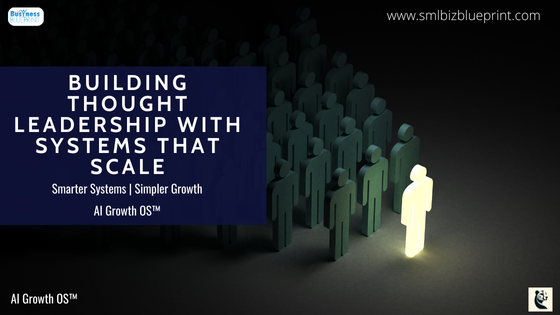

Thought leadership systems are structured processes that turn market questions into consistent, credible insights.
Instead of relying on volume or charisma, they use inputs, synthesis, outputs, and feedback to compound authority.
By reducing decision fatigue and shortening the time from idea to signal, these systems help leaders build trust faster and with more focus.
You’re posting more, writing longer, showing up everywhere—yet nothing sticks.
The likes trickle in, the shares barely register, and the authority you thought you were building feels paper-thin.
Deep down, you know the problem isn’t effort. It’s the hidden drag of decision fatigue: the endless questions of what to say, when to say it, and how to make it land.
Here’s the tension: without a system, every post is a fresh negotiation with yourself. That negotiation drains focus, delays clarity, and quietly erodes trust.
And the cost isn’t just wasted time. It’s opportunity lost—the clients who scroll past, the peers who never cite you, the credibility you never fully claim.
But there’s another way. Systems turn thought leadership from a scramble into a rhythm.
They strip out the noise, reduce the micro-decisions, and free you to focus on what really compounds: sharper insights, faster signals, consistent presence.
You stop chasing relevance and start shaping it.
Because thought leadership isn’t about volume. It’s about building an operating system for your authority—one that makes you the kind of leader people trust to cut through the noise.

What Is Thought Leadership in Business? A Systems Definition
Most people think thought leadership is about personality—but that’s the trap. When you build authority around charisma alone, you chain yourself to constant output.
The more you show up, the more people expect, and the cycle becomes unsustainable.
Frustration grows as the effort increases, but the returns flatten.
The better lens is to see thought leadership as a system, not a performance.
Instead of treating every blog post or LinkedIn update like a one-off act, think in terms of inputs, processes, outputs, and feedback:
Inputs: questions from your market, trends, and blind spots your competitors ignore.
Processing: synthesising those inputs into insights and testable stances.
Outputs: clear, consistent signals—articles, frameworks, or short posts that cut through noise.
Feedback: audience response that shapes and strengthens your next cycle.
Systems create relief by replacing endless decisions with repeatable rhythms.
You don’t have to wonder what to write about each week; your question bank does that. You don’t chase every new platform; your channel defaults decide for you.
The work shifts from scrambling to maintaining a cycle—and that’s where trust compounds.
This matters because identity flows from structure.
When you’re seen as someone who consistently synthesises and shares insight—not just someone who “posts a lot”—your authority moves from fragile to durable.
You’re not a content creator. You’re the architect of a signal system people rely on.
The longer thought leadership remains a personality contest, the more effort you’ll pour into noise that no one remembers. What that means for your business is missed opportunities, wasted time, and a reputation that never matures.
Pro Tip:
Use a single tool (Notion, Airtable, or even a spreadsheet) to capture every market question you hear.
Because authority isn’t built from random ideas—it’s built from consistent stances on recurring questions. The faster you structure your inputs, the sooner you refine your voice. That’s how leaders compound authority.
Stay ahead of the curve!
Subscribe to our newsletter and never miss the latest in business growth and marketing strategies
Why the Default Playbook Fails: Volume ≠ Authority
The common advice—‘just post more’—is a dead end. Churning out endless blogs, videos, or LinkedIn posts might feel productive, but it often creates nothing more than digital clutter.
The frustration comes when you realise the more you publish, the less your content seems to matter. You’re exhausted, yet invisible.
The flaw is that volume doesn’t equal influence. Flooding channels with shallow updates builds what I call cadence debt: the illusion of momentum without the substance of authority.
You keep paying the cost of content creation but never collect the return of trust. Most people don’t realise that every unfocused post lowers your signal-to-noise ratio—and once trust erodes, rebuilding it takes far longer.
Relief comes when you stop measuring effort and start measuring insight density. A single well-structured teardown or framework, shared weekly, positions you as a leader more than seven days of scattered tips. Leaders who step back to synthesise rather than react are remembered.
The ones who post without a system are forgotten the moment the algorithm moves on.
Instead of looking like a desperate content machine, you become the voice people wait for. Not because you publish daily, but because when you publish, it counts. You’re no longer chasing attention—you’re commanding it.
The longer you keep chasing volume, the more you waste effort on content that dilutes your authority. What that means for your business is lost opportunities, credibility that never compounds, and energy spent feeding algorithms instead of building trust.
Pro Tip:
Replace your “post every day” mindset with a “ship one strong stance per week” rule.
Because speed isn’t just about frequency—it’s about reducing latency between insight and signal. Authority comes from being the first to articulate clarity, not the last to add noise.
A Better Lens: Design a Thought Leadership Operating System
Most leaders confuse a content calendar with a system—and that’s the mistake. Calendars tell you when to publish, not what to say or how to sharpen your signal.
The frustration here is real: you can plan out months of posts, yet still feel like you’re producing shallow noise.
Without a system, your calendar becomes a treadmill—motion without movement.
The better approach is to design a Thought Leadership Operating System.
Instead of starting with dates and deadlines, start with a loop:
Question Bank – Capture the real frictions, contradictions, and blind spots you hear in your market.
Synthesis Loop – Dedicate time to compress those questions into one clear, testable stance.
Signal Release – Publish one “canonical artifact” per cycle (essay, teardown, framework), then spin it into derivative posts or clips.
Feedback Refactor – Track what lands, update your stance, and feed insights back into your system.
Relief comes when you stop improvising and start compounding. With an operating system, each cycle builds on the last.
Your work gains weight because it’s connected, not scattered. Instead of wondering what to write, you’re refining what you already stand for.
The loop carries you forward while freeing your focus for deeper thinking.
Your audience learns that when you speak, it’s not filler—it’s signal. You become the strategist who doesn’t just react to trends but sets the terms of the conversation. That’s what authority looks like.
Every week you operate without a system, you waste effort reinventing the wheel. What that means for your business is slower insight, inconsistent messaging, and missed chances to lead when your market is most hungry for clarity.
Maya, a mid-sized consultancy owner, spent hours each week brainstorming new blog ideas.
Her team pushed out content, but it rarely gained traction. Once she started using a simple Question Bank and synthesis loop, her posts began addressing issues her clients actually searched for.
Within two months, inbound leads referenced her articles as the reason they reached out. The shift wasn’t more content—it was sharper signals.
Pro Tip:
Create a living “Question Bank” and commit to answering just one question per week.
Because thought leadership isn’t about producing more—it’s about producing compounding clarity. The faster you test and refine your stances, the sooner you stop chasing relevance and start shaping it.

Consistency Without Burnout: Defaults and Focus
The biggest energy drain isn’t writing—it’s deciding.
Every week you ask yourself: What should I post? Which format should I use? Where should I share it?
This constant negotiation fuels decision fatigue.
The frustration grows when you realise the time you spend deciding could have been spent creating.
Relief comes when you establish defaults—pre-decided rules that eliminate micro-choices.
Defaults might sound rigid, but they’re liberating. Choose one or two channels (e.g., LinkedIn + blog), a fixed cadence (weekly, biweekly), and a simple criterion for content (“Does this offer a non-obvious stance?”).
Suddenly, the cognitive overhead disappears. You don’t waste mornings debating; you execute.
Defaults protect focus and sustain consistency.
Look at James Clear’s “3-2-1 Thursday” newsletter. The format never changes—three ideas, two quotes, one question. That predictability keeps him consistent, week after week, while freeing space for sharpening the ideas themselves.
With defaults, your audience learns what to expect, and you free your mind from trivia.
You’re not the leader who occasionally shows up with bursts of energy—you’re the steady presence people count on. That steadiness builds trust faster than occasional brilliance. It marks you as a professional, not a dabbler.
The longer you keep making ad hoc decisions, the more energy you lose to small choices that don’t matter. What that means for your business is wasted hours, stalled momentum, and a reputation that feels inconsistent—even if your insights are strong.
Early in my own publishing attempts, I tried to post daily.
By Friday, the ideas were thin, the tone forced, and I dreaded hitting publish. What I thought was “discipline” was really noise. It wasn’t until I set defaults—one channel, one cadence, one filter—that I realized consistency isn’t about doing more; it’s about removing friction.
The relief came when I felt clarity instead of burnout.
Pro Tip:
Write down three defaults today—your primary channel, your cadence, and your criteria. Stick to them for 90 days.
Because consistency isn’t just about showing up—it’s about reducing friction so your best thinking can surface. The less time you spend deciding, the more time you spend leading.
Measuring Real Impact: Beyond Vanity Metrics
The frustration comes when your numbers look good, but nothing changes. The likes, impressions, and follower counts keep climbing, yet new clients aren’t reaching out, your inbox stays quiet, and your reputation feels flat.
Vanity metrics are seductive because they give the illusion of progress—but they rarely translate into authority.
The better path is to measure impact, not applause.
Shift your focus to indicators that reflect real influence:
Time-to-Insight (TTI): How quickly you turn raw observations into published stances.
Stance Clarity: Can people repeat your position back to you without distortion?
Inbound Relevance: Are the right people—clients, peers, media—reaching out because of your content?
Revision Rate: Are you evolving your thinking and updating your signals, or clinging to outdated takes?
Relief comes when you see metrics that actually matter. Instead of chasing empty reach, you track signals of trust: citations, invitations to speak, prospects referencing your work in meetings.
Those are signs that your authority is compounding—not just that your content is being scrolled past.
You’re no longer guessing if your work lands—you know, because your stance is echoed in boardrooms, team meetings, and industry discussions. You become the leader who moves thinking forward, not the one chasing engagement hacks.
The longer you track vanity metrics, the more time you waste optimising for algorithms instead of trust. What that means for your business is visibility without influence—lots of noise, but no authority.
Pro Tip:
Replace “likes” with three core metrics: Time-to-Insight, Inbound Relevance, and Stance Clarity.
Because measurement isn’t about proving activity—it’s about proving authority. The faster you align metrics with trust, the sooner you know if you’re truly leading or just adding to the noise.
Transform your business with insights that matter.
Subscribe to Pulse for exclusive strategies designed to drive your success.
Join Pulse Now
High-Leverage Thought Leadership for Small Business
Small businesses often assume thought leadership is out of reach—and that’s the mistake.
The frustration comes from seeing big brands dominate with research reports, polished videos, and huge content teams. It feels impossible to compete when you’re already stretched thin.
But most people don’t realize: thought leadership doesn’t scale with budget, it scales with focus.
Relief comes when you operate with a one-loop stack.
A simple system—Question Bank (spreadsheet), Synthesis Doc (shared memo), Signal Template (blog or post), Retrospective (15-minute review)—is enough to create consistent authority.
You don’t need a research department or design team. You need repeatable cycles that transform market questions into usable insights.
Small businesses have a hidden advantage: constraint forces clarity. Where big brands spread wide, small businesses can go deep. One sharp stance, delivered consistently, can cut through better than a dozen generic takes.
Authority grows not from scale but from the discipline of refining your voice inside a system.
You’re not the small player trying to keep up—you’re the signal others look to for focus. Clients, peers, and partners recognise you as the business that sees what others miss.
The longer small businesses delay building systems, the more they waste energy reacting instead of leading. What that means for your business is missed chances to own conversations in your market while bigger players continue to drown you out.
Pro Tip:
Set up a “Question Bank” in a spreadsheet and commit to answering one per week.
Because in small businesses, speed comes from simplicity. The sooner you build a repeatable cycle, the sooner your authority compounds—without needing the budget of a big brand.
Tools That Actually Help: Content Automation for Faster Cycle Time
The wrong tools create more friction, not less. Many leaders fall into the trap of buying complex platforms or chasing shiny apps, only to end up with bloated workflows.
The frustration builds when tools promise “automation” but still leave you drowning in notifications, exports, and logins.
Most people don’t realize that every extra tool without purpose multiplies your cognitive load.
Relief comes from using tools only where judgment isn’t required.
Automate capture, tagging, scaffolding, and scheduling—don’t outsource your stance. Simple tools like Notion, Obsidian, or Airtable can organise your Question Bank.
AI can scaffold draft outlines or summaries. Scheduling apps like Buffer or Hootsuite push content out reliably.
This way, tools serve the system, not replace it.
The leaders who win use tools as multipliers, not crutches. They don’t expect software to provide insight—they use it to free their energy for synthesis and clarity.
By automating what’s repetitive, they preserve focus for what builds authority: crafting signals that shape conversations.
You’re not the leader who jumps on every new platform—you’re the one who runs a tight system with tools that extend your reach. People trust leaders who use resources wisely, not those who look like they’re endlessly experimenting.
The longer you keep juggling tools without a strategy, the more time and money you waste on noise. What that means for your business is slower cycles, higher fatigue, and insights stuck in draft form instead of reaching the market.
Pro Tip:
Pick three tools only—one for capture, one for synthesis, one for scheduling—and commit to them.
Because tools don’t create clarity, they create capacity. The faster you reduce tool fatigue, the sooner you can put your energy where it matters: sharpening your authority.
The Overlooked Angle: Latency as a Moat
The real threat isn’t silence—it’s slowness. Many leaders delay publishing until every idea is polished to perfection. The frustration builds when by the time you hit publish, someone else has already shaped the conversation.
Your insight might be sharper, but it arrives too late to matter.
Relief comes from lowering latency—the time between observation and stance. Instead of waiting weeks to refine, publish a “versioned stance”: share your best current view, then update it as new data or perspectives emerge.
This way, your audience sees not just your insights but your evolution in real time.
That transparency builds trust faster than silence ever could.
The leaders who stand out are the ones who move first, then refine. During crises or fast-moving trends, the voices that gain traction are those who offer clarity early—even if imperfect.
Big institutions often lag behind, but agile leaders who publish quickly shape the frame others work within.
You’re not reckless; you’re responsive. You show your market that your value isn’t in being flawless, but in being the first to cut through confusion with clarity. That makes you the reference point others quote and build on.
The longer you wait to publish, the more ground you lose to faster voices. What that means for your business is missed opportunities to lead—and the painful reality of always reacting instead of defining the conversation.
The leaders who dominate a market aren’t always the smartest or most polished.
They’re the ones who move first—staking a stance when others are still editing their drafts. I’ve watched industries shift because someone published a “good enough” take before anyone else dared.
Authority grows from being visible at the right time, not from chasing perfection behind closed doors. Latency is the hidden moat most leaders never see.
Pro Tip:
Commit to publishing one “good enough” stance within 72 hours of identifying a key market question.
Because speed isn’t recklessness—it’s responsiveness. The faster you share, the sooner you shape the frame of discussion, and the longer your authority compounds.
Conclusion
Right now, you’re paying the hidden tax of scattered effort.
Every time you sit down to write without a system, you lose energy to decisions that don’t matter. Every post that lands flat chips away at the credibility you’re trying to build.
The frustration isn’t that you’re not working hard enough—it’s that your effort isn’t compounding.
Relief is closer than it feels. When you adopt systems—defaults, loops, and feedback—you replace chaos with rhythm. You stop second-guessing and start publishing with confidence.
The work feels lighter, not heavier, because each cycle carries you forward. That’s when your authority starts to compound—and people begin to trust your voice as a steady signal in the noise.
You’re no longer just another voice chasing attention—you’re the leader who consistently sets the frame. The one your market quotes, shares, and returns to for clarity.
That’s the real payoff of thought leadership systems: not just visibility, but durable authority.
The longer you delay, the more opportunities you forfeit to faster voices. What that means for your business is the difference between shaping conversations and being shaped by them.
You’ve done enough the hard way. Let your business breathe. This isn’t about AI, hacks, or hustle—it’s about clarity, freedom, and growth. And it starts now.
The choice is simple but decisive: stay stuck in the cycle of noise and fatigue, or take the step to build a system that frees your focus and compounds your authority.
Leaders who design systems become trusted guides. The rest stay busy.
Action Steps
Define Your Signal, Not Just Your Schedule
Write down 3–5 themes you want to be known for. This becomes the backbone of your system.
Build a Question Bank
Start collecting every market question, friction, or contradiction you hear—from clients, peers, or competitors. Store them in a simple spreadsheet or tool.
Set Your Defaults
Choose one or two channels, one cadence (e.g., weekly), and one filter (“Does this offer a non-obvious stance?”). Defaults cut decision fatigue.
Run Synthesis Loops
Dedicate time to compress questions into clear stances. Produce one strong “canonical artifact” per cycle (essay, teardown, framework).
Automate the Repetitive, Not the Creative
Use tools to capture, tag, scaffold, and schedule. Keep the thinking—your stance—in your own hands.
Measure Authority, Not Applause
Track indicators like Time-to-Insight, Inbound Relevance, and Stance Clarity. Don’t get stuck on vanity metrics.
Reduce Latency: Publish, Then Refine
Share your best current stance quickly. Update as new insights emerge. Speed + evolution beats slow perfection.
The longer you wait to systemise, the more effort you waste on noise that doesn’t compound.
These steps help you reclaim control, focus your energy, and start compounding authority today.
FAQ’s
Q1: What exactly is a thought leadership system?
A1: A thought leadership system is a repeatable framework for turning questions and observations into consistent, credible content. It combines inputs (market questions), processing (synthesis), outputs (content signals), and feedback (refinements).
Q2: Why doesn’t posting more content automatically make me a thought leader?
A2: Because volume without clarity creates noise. True authority comes from consistent, well-structured insights that people remember and trust—not from flooding channels with generic updates.
Q3: How can small businesses build thought leadership with limited resources?
A3: By focusing on simplicity and consistency. A one-loop stack—a question bank, a synthesis doc, a signal template, and a short review—is enough to establish authority without the budget of a big brand.
Q4: What metrics should I track to measure real impact?
A4: Instead of likes or impressions, focus on Time-to-Insight, Stance Clarity, Inbound Relevance, and Revision Rate. These reflect authority and influence, not just visibility.
Q5: How do I stay consistent without burning out?
A5: Set defaults. Choose your main channel, cadence, and decision criteria in advance. Pre-decisions eliminate fatigue and help you focus on sharpening your thinking rather than juggling logistics.
Q6: What tools actually help with thought leadership systems?
A6: Use tools where judgment isn’t required: capture (Notion, Airtable), scaffolding (AI for outlines), and scheduling (Buffer, Hootsuite). Avoid tools that promise to “replace” your stance—insight can’t be automated.
Q7: How fast will I see results from using a system?
A7: Most leaders notice reduced stress and increased consistency within 30–60 days. Authority compounds over time, but speed comes from starting cycles now, not waiting for perfection.
Bonus Section: Three Unconventional Shifts to Strengthen Your Thought Leadership System
Most leaders follow the same playbook: post more, polish harder, measure likes. But authority doesn’t grow from convention—it grows from perspective.
Here are three unexpected practices that can sharpen your system and stretch your thinking.
Treat Drafts as “Signals,” Not Content
Leaders delay publishing until their ideas feel flawless, only to discover the conversation has already moved on.
Instead of holding back, treat drafts as living signals—publish them as evolving thoughts, with the expectation that they’ll be refined later. This shifts you from reactive to responsive, and it shows your audience how you think, not just what you conclude.
You become a leader who values clarity-in-motion over perfection-in-silence—the kind of voice people trust to guide them through uncertainty.
Every week you hold back, someone else frames the conversation.
Measure Silence, Not Just Response
Most leaders obsess over visible metrics—likes, shares, comments—yet still feel unseen when real influence doesn’t materialise.
Authority often shows up in subtle ways: competitors echoing your language, clients referencing your stance without attribution, and peers adjusting their framing after you publish. That’s silent adoption, and it’s one of the strongest markers of impact.
You become the leader whose ideas travel further than your byline. Influence is not just measured—it’s felt.
The longer you chase vanity metrics, the more blind you are to the quiet authority you’re already building.
Build a “No-Write” Day Into Your System
The grind of daily content output leads to repetition and shallow insights.
A deliberate pause—a weekly “no-write” day—creates space to scan contradictions, explore fresh questions, and connect dots across domains. This break isn’t downtime; it’s fuel for sharper synthesis.
You’re no longer the content machine burning out. You’re the leader who balances rhythm with reflection, producing fewer but far stronger signals.
Without structured white space, your system risks becoming efficient but hollow—fast but forgettable.
Other Articles
Smarter AI-Powered Visibility for Small Business Owners
The Hidden Cost of Task Switching and How AI Fixes It
5 Best AI Tools to Repurpose & Distribute Your Content Effortlessly