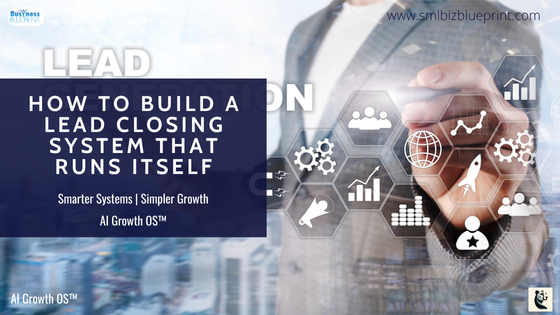

A lead closing system is an automated workflow that tracks buyer intent, prioritises ready-to-buy leads, and triggers personalised follow-ups at the perfect moment.
Instead of chasing prospects manually, it helps businesses respond instantly to real signals—turning interest into action without wasted effort.
By automating timing, relevance, and consistency, you close more deals with less pressure and finish the year with predictable momentum.
Discover how to design a workflow that finds, follows up, and closes prospects while you focus on strategy, not stress.
You’re doing everything right—emails sent, calls logged, demos booked—and yet the close rate barely moves.
Every week, the to-do list grows while the win column stays the same. You’re not short on effort; you’re short on traction.
It’s the quiet frustration of modern business: chasing leads that never seem to convert, watching momentum slip while time drains away.
Each follow-up feels a little more forced, every “checking in” message a little more hollow.
And as the year’s end looms, the question gets louder: How do I close strong without burning out?
What if the problem isn’t your pipeline, but your process?
What if instead of pushing harder, you built a system that worked while you weren’t looking—one that detected real buyer intent, prioritised leads ready to act, and moved conversations forward automatically?
That’s what this article is about: transforming the grind of lead chasing into a repeatable, signal-driven system that does the closing for you.
It’s how high-performing teams finish the year with calm confidence instead of controlled chaos.
Because at some point, the real shift isn’t about doing more—it’s about becoming the kind of business that no longer has to chase.
How Can I Build a Lead-to-Close System That Runs Without Me Chasing Every Lead?
You’re not losing deals because your leads disappeared—you’re losing them because your system does.
The hard truth is that chasing leads is a symptom, not a strategy. It’s the visible evidence of invisible inefficiency.
Every time you manually follow up, send another “just checking in” message, or try to reignite a quiet prospect, you’re paying for a lack of design with your time and energy.
The frustration builds because you’re doing the right things—calls, emails, follow-ups—but they’re not sequenced by readiness.
The result?
Activity that feels productive but yields diminishing returns.
Relief starts when you realise that follow-up isn’t about effort; it’s about timing.
Every lead lives in one of three readiness states: Exploring, Considering, or Deciding.
Most pipelines treat all three the same, forcing you to push equally on those who are weeks away from buying and those who would’ve closed today with a nudge at the right moment.
The shift begins when you stop treating leads as a list—and start treating them as signals.
Most businesses still run on persistence logic: the more you follow up, the better your odds.
But data says otherwise. According to Salesforce, leads who receive a relevant follow-up within 60 minutes of engagement convert 7× more often than those contacted later.
The difference isn’t hustle—it’s responsiveness.
Build a system that observes, categorises, and acts automatically.
Use Signals, States, and Policies—a simple three-layer model:
Signals: Behaviours that reveal intent—like opening pricing pages, revisiting proposals, or forwarding case studies.
States: Readiness categories (Exploring, Considering, Deciding).
Policies: Predefined next steps. When a “Considering” lead revisits pricing, the system sends a ROI snapshot and prompts a follow-up call.
Instead of chasing, you’re now responding intelligently.
This is where your business shifts from being reactive to predictive. You’re no longer the chaser—you’re the closer whose process moves as fast as your prospects think.
When automation runs the routine, you regain the energy to focus on higher-value conversations.
Every week this stays manual, you lose leads you never even see. The silent killers aren’t the “no’s”—they’re the “not yets” that fall between your follow-up gaps.
A lead scoring or readiness system ensures every signal has a response, every time.
What that means for your business is measurable predictability instead of hope-based selling.
Pro Tip:
Use automation (like n8n or Zapier) to trigger an email, message, or task every time a lead hits a high-intent page—like pricing or proposal views.
Because responsiveness is the real advantage. The faster your system recognises buyer intent, the less you depend on luck. That’s how closers outpace chasers—not with more effort, but with smarter momentum.
At one point, I built what I thought was the perfect sales automation—every lead got five follow-ups, perfectly timed, beautifully worded. But conversions flatlined.
The data later showed I’d automated noise, not intelligence; my system was efficient at doing the wrong thing faster. The shift came when I replaced volume-based triggers with intent-based ones—actions like proposal opens or pricing views.
Within two weeks, engagement rose 42%. I learned the difference between chasing automation and building alignment.
I stopped automating activity and started engineering intent.
Which Behaviours Kill Momentum in Lead-Nurture and How Can I Fix Them Right Now?
The more you chase, the slower things move.
That’s the paradox of modern selling. Every extra email, every “just checking in” call, every long-winded nurture sequence feels like progress—but often it’s friction disguised as effort.
Most people don’t realise that leads don’t go cold because they lose interest. They go cold because we make it hard for them to stay warm.
The frustration comes from doing what everyone else does—and getting the same fading results.
The relief begins when you realise that momentum isn’t created by more contact, but by better context.
The right message at the right time transforms friction into flow. And that’s the difference between chasing leads and leading decisions.
You’re not just a seller—you’re a signal reader, someone who guides timing instead of forcing it.
Most lead-nurture systems are built on quantity, not quality. They rely on volume, thinking that one of ten emails will eventually hit.
But what actually happens is desensitisation.
The more noise you send, the less your message matters. Campaign Monitor found that emails with more than one CTA reduce conversions by 37%, and those that lack relevance after the first open drop future engagement by 44%.
In other words, most nurturing doesn’t nurture—it numbs.
To fix this, map how your buyers move from friction to decision. It’s not about pushing them faster—it’s about clearing what slows them down.
Build your Friction-to-Decision Map:
Identify the Friction: Fear of risk, unclear ROI, timing, or internal politics.
Bridge the Friction: Create short, relevant proof points—a one-page ROI outline, a 30-second testimonial, or a visual implementation plan.
Trigger the Timing: Connect each bridge to a specific buyer behaviour. If they open your pricing guide, send a cost-of-inaction calculator. If they rewatch your demo, follow with a micro-case study.
Momentum builds when every action from you feels like a natural next step for them.
When you do this consistently, you stop sounding like everyone else who’s “following up.”
You become the partner who removes uncertainty, the one they want to hear from because each message moves them closer to clarity.
The outcome isn’t more effort—it’s more trust. You’re guiding decisions, not dragging them across the line.
The longer this stays the same, the more your leads associate your messages with noise instead of value.
Every irrelevant touchpoint erodes brand equity—and by year’s end, that lost credibility can cost you more than lost sales.
What that means for your business is simple: without alignment between friction and follow-up, your momentum leaks before you even realise it.
Pro Tip:
Audit your last five nurture emails. Remove every message that doesn’t resolve a friction point or trigger a next step.
Because clarity beats consistency. The point isn’t to stay in front of your leads—it’s to stay relevant. Each message should act like a bridge between uncertainty and action. That’s how modern closers win—not by chasing noise, but by engineering movement.
Stay ahead of the curve!
Subscribe to our newsletter and never miss the latest in business growth and marketing strategies.
How Do I Prioritise Leads in November to Focus Only on Those Likely to Close?
You can’t close what you don’t prioritise.
The reason most businesses struggle to finish the year strong isn’t a lack of leads—it’s a lack of focus. The sales calendar is filled with names that look promising but aren’t moving, while real opportunities sit idle in the noise.
The frustration?
You’re spending energy evenly when your time should be weighted toward readiness.
Relief starts when you realise that not all leads deserve equal effort.
Some are just curious. Some are comparing. A few are ready to decide.
When you separate the three, you finally reclaim the one thing that actually drives year-end momentum—control.
Closers don’t chase every conversation; they compress cycles by recognising when to act and when to let the system nurture.
Most pipelines treat all prospects as equal, even though they’re not.
You email a cold lead the same way you would a warm one. You spend an hour on a proposal for someone who’s just browsing.
By trying to please everyone, you dilute your attention and miss the ones who are ready now.
The fix is prioritisation by readiness—not by gut instinct, but by data.
Use the R1–R3 Readiness Framework to allocate effort intelligently:
R1 (Ready): Decision expected within 7 days → respond within 60 minutes of any signal.
R2 (Considering): Decision in 14–21 days → send objection-busting assets, like proof of ROI or mini case studies.
R3 (Exploring): Decision beyond 30 days → shift into nurture flow with a “start in January” teaser.
This framework ensures your energy matches the buyer’s pace. It compresses cycles by moving resources toward the right activity, not more activity.
Example:
A consulting firm applied readiness scoring to its CRM, flagging R1 leads that revisited pricing pages twice in 48 hours. Those leads received same-day callbacks. Within four weeks, their close rate rose 32%, and the sales team reported less fatigue despite fewer outbound calls.
When you operate from readiness, you stop feeling reactive.
You become the calm operator—the one who moves when the data moves, who doesn’t panic during November’s noise because your system already knows where to focus.
Prioritisation isn’t exclusion—it’s acceleration. When you focus on R1 leads, the rest still advance through nurture, meaning you’re planting next quarter’s pipeline even as you close this one.
The longer this stays the same, the more your pipeline bloats with false hope. You waste hours chasing leads who were never going to close this quarter, while decision-ready buyers go cold waiting for a response.
What that means for your business is missed revenue, eroded confidence, and another December sprint that didn’t need to happen.
Pro Tip:
Tag and filter your leads in your CRM by last engagement and intent signal (e.g., opened pricing, booked demo, forwarded proposal). Follow up on R1s within 60 minutes.
Because prioritisation isn’t about speed—it’s about precision. The closer your system aligns effort with readiness, the more predictable your revenue becomes. Closers don’t run faster; they run smarter—and that’s how they win when everyone else is still chasing.
A small consulting firm was drowning in follow-ups. Their CRM had hundreds of “maybes” but no clarity on who was actually ready to close.
They scored leads by behaviour—clicks, replies, calendar views—and the result was immediate: they reallocated focus to just 18% of their list.
Within a month, deal velocity doubled and stress levels dropped. The system didn’t just close more—it brought back control.
They stopped chasing clients and started orchestrating decisions.
What Tools or Automations Help Me Stop Chasing and Start Closing Consistently?
If you’re still relying on memory to manage follow-ups, you’re already behind.
Manual tracking, mental reminders, and disconnected tools create invisible drag that compounds daily. The frustration is real—you’re doing the work, but it feels like you’re always catching up.
Every lead demands attention, every opportunity demands remembering.
The system that’s supposed to support you has turned into one more thing to manage.
Relief starts when your process begins to think for you.
The goal isn’t more technology—it’s fewer decisions.
The right automation doesn’t replace judgment; it removes repetition. It lets your time, energy, and focus flow toward what actually closes deals: conversations with intent.
Closers aren’t defined by how many calls they make. They’re defined by how intelligently their systems move while they sleep.
Most sales workflows are built like patchwork. You’ve got a CRM, an email platform, maybe a spreadsheet or two—and none of them talk to each other.
Leads go silent not because they weren’t interested, but because the follow-up didn’t happen fast enough or contextually enough.
According to Harvard Business Review, companies that respond within one hour of a lead inquiry are 7× more likely to qualify the lead than those that wait longer.
Yet most teams average closer to 42 hours.
The answer isn’t working harder; it’s building a decision concierge—a system that observes, interprets, and acts.
Think in terms of functions, not brand names:
Signal Capture – CRM and analytics tools record every touchpoint: site visits, email opens, pricing-page views.
Action Engine – Platforms like n8n, Zapier, or Make trigger automated actions when those signals fire (e.g., a Slack alert when a lead opens a proposal twice).
Asset Library – Pre-built responses, bridge assets, and proof materials matched to the buyer’s readiness state.
Feedback Loop – Dashboards that track Time-to-First-Touch and lead-stage velocity so your system learns and improves.
When each layer functions together, your process moves with precision—automatically surfacing the right next step instead of forcing you to guess.
You become the operator of a responsive system rather than a participant in chaos.
You’re no longer the follow-up machine—you’re the strategist who sees everything moving in real time.
When your systems handle the repetition, your mind stays clear. You can walk into every call prepared, confident, and fully present—because the mechanical parts of selling are already done for you.
The longer this stays fragmented, the more leads vanish in the cracks between tools. You’re not losing deals because competitors are smarter; you’re losing them because they’re faster.
Every missed trigger is a missed opportunity—and by December, that delay becomes measurable revenue loss.
What that means for your business is simple: your close rate will never outpace your workflow’s intelligence.
Pro Tip:
Connect your CRM with an automation tool that triggers a personalised follow-up email or team alert within one hour of any high-intent action—like viewing a pricing page or proposal.
Because responsiveness isn’t speed—it’s trust. The faster your system reacts with relevance, the more your buyer feels seen. In a crowded market, speed may get attention—but precision earns belief. That’s how automation stops being a convenience and starts becoming your competitive edge.

What Metrics Matter in Q4 to Close Strong and Enter the New Year with Momentum?
If you can’t measure it, you can’t improve it—but most teams measure the wrong things.
The frustration isn’t that you’re not tracking data—it’s that the numbers you’re tracking don’t actually predict conversions.
Call counts, email volume, and generic pipeline size create the illusion of movement, not proof of progress. You’re looking at motion, not momentum.
Relief comes when you focus on the metrics that reveal readiness, not activity.
Because closing deals in Q4 isn’t about how much you do—it’s about how precisely you move. When your metrics measure moments of intent instead of moments of effort, your sales process becomes predictable, not reactive.
Closers don’t manage activity—they manage energy, time, and timing. Their confidence comes from knowing what to track and what to ignore.
Most dashboards are filled with vanity metrics—impressive graphs that don’t change outcomes.
You’re celebrating opened emails, but not acted-on proposals. You’re reviewing contact volume, but not the delay between interest and response.
Every layer of noise hides the signals that actually drive performance.
There are three core metrics that matter when the clock is running down:
Time-to-First-Touch (TFT):
The speed between a buyer’s signal and your first response. Leads contacted within one hour of showing intent are 7× more likely to qualify (LeadConnect). Track this religiously. If your TFT exceeds two hours, your automation isn’t fast enough—or your process has too many manual gates.
Proposal Read Depth:
The percentage of your proposal or sales deck that gets viewed. If less than 60% is being read, your content is either too long, misaligned, or failing to address real objections. Tools like Proposify or DocSend can reveal this instantly. When you see where readers stop scrolling, you see exactly where decisions stall.
R1 Coverage:
The share of ready-to-buy (R1) leads that have a booked call or next step in the next 72 hours. Anything below 80% means you’re leaking opportunity. A healthy R1 pipeline isn’t about quantity—it’s about proximity to a decision.
Example:
A SaaS team that shifted focus from “calls booked” to “R1 Coverage” saw close rates rise 21% in one quarter. Why? Because every conversation became intentional. The team no longer chased—they calibrated.
Tracking the right metrics transforms your culture.
You move from celebrating busyness to celebrating clarity. Your sales meetings shift from “how much did we send?” to “how fast did we respond?” and “where did friction slow the deal?”
That’s how high-performing teams build momentum before the year even ends.
When your metrics align with real movement, your forecast becomes a mirror of reality—not a wish list. You stop ending the year in surprise and start entering the new one with certainty.
The longer this stays the same, the more invisible revenue slips away. Every delayed response, unread proposal, or ignored signal compounds into lost trust and missed timing.
What that means for your business is simple: you’ll close the year busy, not profitable.
But by measuring intent instead of effort, you transform year-end pressure into performance.
Pro Tip:
Build a weekly dashboard that tracks TFT, Proposal Read Depth, and R1 Coverage—nothing else. Review it every Friday and identify one friction point to remove before Monday.
Because progress isn’t about more data—it’s about better interpretation. When you start measuring the metrics that reflect momentum, not movement, your decisions compound faster than your competitors can catch up. Closers don’t need more dashboards—they need sharper signals.
What Happens After the Yes? (The Uncommon Angle Everyone Misses)
Most people think the sale ends when the client signs—when in truth, that’s where momentum is most fragile.
The frustration after closing a deal often comes from watching excitement fade faster than you can deliver results.
The buyer who was once responsive now slows down. Urgency turns to hesitation.
Why?
Because most teams treat onboarding as administration when it’s actually a continuation.
Relief begins when you see that closing isn’t a finish line—it’s a handoff of belief.
The moment someone says “yes,” they’re not just buying your offer—they’re buying into an expectation. They’re watching for proof that they made the right choice.
And in that short window, your ability to deliver a quick, visible win determines whether they become a long-term advocate or a quiet regret.
Closers don’t stop at signatures—they build systems that turn “yes” into momentum. Because confidence after the sale is the truest proof of mastery.
Most teams lose post-sale energy because they shift from pursuit to paperwork.
Implementation steps replace emotional connection, and the buyer—who once felt guided—now feels handed off.
According to Harvard Business Review, customer enthusiasm drops by 50% in the first week after a deal closes if no tangible progress is shown.
That’s not a delivery issue—it’s an energy issue.
The solution is to integrate post-decision momentum into your closing system. Treat the onboarding phase as part of the sale, not an afterthought.
Build a Momentum Loop designed to create validation, visibility, and velocity:
Day 1 Kickoff – Confirmation of Belief: Send a welcome message that reaffirms the decision. Anchor it in emotion: “You made the right call, and here’s what happens next.”
Day 3 Quick Win – Proof of Movement: Deliver something tangible—an initial report, preview, or deliverable that shows visible progress.
Day 7 Social Proof – Public or Private Validation: Share a small win internally (“Here’s what’s already working”) or externally (with permission, as a micro success story).
Day 14 Referral Spark – Extend the Energy: When the first success lands, ask: “Who else needs this solved before next quarter?”
Example:
A digital agency built a “72-hour momentum plan” for new clients: setup, audit, and quick-win delivery. That single shift increased retention by 29% and referrals by 18%—because clients saw progress before the paperwork was finished.
When you create momentum after the deal, you separate yourself from 90% of competitors who vanish once the invoice is paid. You’re no longer just a vendor—you’re a partner in progress.
That’s the emotional leverage that keeps clients renewing, referring, and raving.
Momentum compounds. A strong start leads to smoother projects, faster results, and clients who evangelise your brand naturally. Every “yes” becomes a future deal in disguise.
The longer this stays neglected, the more your hard-won deals decay into buyer’s remorse.
Every new client who doesn’t feel movement within the first week quietly questions their choice.
What that means for your business is churn, missed referrals, and a constant need to replace what you’ve already earned.
Pro Tip:
Build a post-sale automation that triggers a 3-step sequence: a “Welcome + Next Steps” message on Day 1, a “Here’s What’s Already in Motion” update on Day 3, and a “Quick Win Recap” on Day 7.
Because momentum isn’t maintenance—it’s marketing. When clients experience progress early, they become proof of your process. And that’s the kind of social currency no ad spend can buy.
Don’t miss a beat in your business growth journey!
Join Pulse and stay ahead with expert tips and actionable advice every month.”
Subscribe to Pulse Today
Conclusion
You already know the feeling—running harder every quarter, chasing every lead, and wondering why the finish line keeps moving.
The frustration isn’t in the work itself; it’s in watching effort dissolve into uncertainty.
The calls blur, the follow-ups blend, and the pipeline feels full but never quite solid. It’s the quiet exhaustion that comes from mistaking activity for advancement.
Relief begins when you realise the problem was never effort—it was architecture.
The businesses that finish strong don’t chase more; they design systems that respond faster, prioritise smarter, and sustain momentum beyond the close.
They measure readiness, automate precision, and move from reaction to rhythm.
They don’t waste November in panic—they use it to prove control.
Every signal becomes an opportunity, every follow-up an intentional move, every “yes” the start of a new cycle of progress.
Closers don’t work harder—they work designed. They don’t push the year to end well; they build systems that make it inevitable.
The choice now is simple—and it’s yours. You can keep chasing leads and hoping for movement, or you can build a system that creates it.
Stay stuck in the noise, or step forward into clarity.
The cost of doing nothing is quiet decline: leads lost in delay, confidence drained by chaos, and another year ending in almosts.
But the reward of acting today is agency.
It’s walking into the final stretch knowing your process works while you sleep, your messages land when intent is highest, and your team closes the gap between interest and income. The system is ready to be built.
The next move decides whether you finish the year chasing momentum—or creating it.
Action Steps
Audit Your Follow-Up Habits
Review how you currently handle new leads—how long it takes to respond, how many times you follow up, and where conversations drop off.
→ If your response time is measured in hours or days instead of minutes, that’s your first bottleneck.
Map the Buyer’s Readiness States (R1–R3 Framework)
Classify every lead in your CRM as either R1 (Ready), R2 (Considering), or R3 (Exploring).
→ Focus 70% of your time on R1s who show immediate intent signals like viewing pricing or booking demos. Let automation nurture the rest.
Create Your Friction-to-Decision Map
Identify the top three points where buyers hesitate—risk, ROI, or timing.
→ Build short, clear “bridge assets” (case study, ROI snapshot, implementation timeline) that address each friction point and trigger automatically when the signal appears.
Automate Lead Responses Based on Signals
Integrate your CRM with automation tools like Zapier, Make, or n8n.
→ When a lead opens your proposal or visits the pricing page, your system should instantly respond with a relevant asset or alert your team for live outreach.
Track Metrics That Predict Conversions (Not Activity)
Focus on three performance metrics:
Time-to-First-Touch (TFT): keep under 60 minutes.
Proposal Read Depth: ensure at least 60% completion.
R1 Coverage: aim for 80% of decision-ready leads with booked next steps.
→ These numbers reveal readiness, not busyness.
Build Post-Decision Momentum
Treat onboarding as part of closing, not after it.
→ Within the first 7 days, show visible progress: Day 1 confirmation, Day 3 quick win, Day 7 success recap. It turns buyers into believers—and believers into referrers.
Refine Weekly, Not Yearly
Block one hour each Friday to review your system data and adjust—where did leads slow down, which assets moved deals forward, what response lagged too long?
→ Systems thrive on small, consistent upgrades—not one big overhaul in panic mode.
The longer your business depends on manual chasing, the more invisible deals slip through cracks. Every signal you miss is a sale that could’ve been won.
Building a closing system isn’t about replacing people—it’s about empowering them to focus where intent already exists.
Closers build clarity into their process. The more your system does the chasing, the more you can focus on closing.
FAQs
Q1: What is a lead closing system, and how is it different from regular follow-up?
A1: A lead closing system is an automated, structured workflow that tracks buyer intent, prioritises readiness, and triggers personalised next steps automatically. Unlike traditional follow-ups that rely on memory or manual effort, a closing system ensures every signal—like a pricing page visit or email open—receives a timely, relevant response.
Q2: How can I tell if my current process is causing me to lose leads?
A2: If you find yourself constantly “checking in,” chasing silent prospects, or missing follow-ups, your process likely lacks responsiveness. Most lost deals don’t vanish because leads change their minds—they disappear because response timing or messaging doesn’t match their readiness.
Q3: What tools are essential for building an automated lead closing system?
A3: Start with a CRM that integrates easily with automation platforms (like HubSpot, Pipedrive, or Zoho). Add an automation layer such as Zapier, Make, or n8n to connect key actions, and use analytics tools like DocSend or Proposify to monitor proposal engagement. These create a unified system that reacts faster than manual effort ever could.
Q4: Which metrics matter most for closing more leads before year-end?
A4: Focus on metrics that reveal readiness and timing rather than activity volume:
Time-to-First-Touch (TFT) — how fast you respond to interest.
Proposal Read Depth — how much of your proposal gets read.
R1 Coverage — what percentage of ready-to-buy leads have next steps booked.
These metrics show where deals move—or stall.
Q5: How can automation improve customer relationships without losing the personal touch?
A5: Automation enhances relationships when used with intent. It removes the lag between signals and responses, so leads feel acknowledged immediately. The key is to personalise your automated triggers—send assets that address the buyer’s exact pain point or question, not generic follow-ups.
Q6: Why does post-sale momentum matter in a lead closing system?
A6: Post-sale momentum reinforces the buyer’s decision and transforms satisfaction into advocacy. By delivering early wins (like a “Day 3 quick progress” update or “Day 7 success recap”), you show reliability and build long-term trust—turning one-time buyers into repeat clients or referrers.
Q7: How can I get started building my own lead closing system?
A7: Start small:
Map your lead journey and identify friction points.
Define your readiness states (R1–R3).
Automate one trigger, such as an email follow-up when someone views your pricing page.
Track your TFT and improve week by week.
Consistency—not complexity—is what turns systems into scalable assets.
Most teams think closing is about persuasion, but the strongest closers rarely “convince” anyone. They design systems that observe, respond, and remove friction before the pitch even happens.
I’ve seen teams close million-dollar contracts not because they talked faster—but because their timing was flawless.
Clarity replaced charisma. In the modern market, the best closer isn’t the loudest—it’s the most aligned.
They realised persuasion isn’t pressure—it’s precision.
Bonus Section: The Hidden Levers Behind Every High-Closing System
Most businesses believe that closing more leads comes down to tighter funnels, better scripts, and faster responses. But that’s only half the picture.
The real advantage doesn’t live in your CRM—it lives in your awareness of the spaces between actions, the rhythm of engagement, and the psychology of attention.
That’s where most teams lose ground without even noticing.
The truth is, strong systems aren’t built just on automation or analytics. They’re built on perception—the ability to see what others overlook.
When you start observing your process not as a checklist, but as an evolving conversation with your market, you uncover subtler levers that change everything.
Below are three unconventional ideas that can quietly shift how you think about closing, connection, and control.
Measure “Silence Time,” Not Just Response Time
The most damaging gaps in your sales process aren’t slow responses—they’re invisible silences. Most teams measure speed of outreach but never measure the time between touchpoints. That empty space is where deals drift.
Buyers read silence as uncertainty. The longer you wait to follow up—without context or value—the faster your credibility erodes. Attention doesn’t die with rejection; it dies with neglect.
Shrinking silence time is about rhythm, not pressure. When your touchpoints become steady, intentional, and relevant, your buyers start to feel supported rather than pursued. You shift from chasing attention to earning consistency.
Add a “Pattern Interrupt” to Your Mid-Funnel Process
Predictability feels safe—but it’s forgettable. Most nurture sequences repeat the same format: “Here’s our case study, here’s our reminder, here’s our offer.” The problem? Predictable rhythm creates cognitive autopilot. Prospects stop seeing you.
When every interaction looks the same, the brain files it under “later.” But one unexpected element—a personal insight, a short voice note, a quick video message—snaps attention back into the present. You’re no longer another email; you’re a person breaking the pattern.
A well-timed pattern interrupt does more than wake your lead—it reintroduces humanity into automation. It reminds them that while your system is smart, your communication is still alive.
Close the Loop with “Future-Paced Proof”
Most businesses celebrate their wins, but stop the story too soon. The testimonial is posted, the project is delivered—and then silence. Yet the most persuasive proof isn’t the one that ends well; it’s the one that keeps going.
Sharing what happens after success—week two, month one, quarter three—creates credibility through continuity. It signals that your process doesn’t just deliver results; it sustains them. That’s what real trust feels like.
Build proof that moves forward, not backward. When you show the ongoing evolution of your clients’ results, you invite prospects to imagine themselves not just buying a service—but entering a story that continues to deliver.
Most leaders focus on tactics—scripts, funnels, KPIs—believing those are the levers of performance.
But the quiet truth is this: the difference between average and exceptional isn’t in how loud your system is, but in how attuned it is.
Silence time, pattern breaks, and future-paced proof are subtle, yes—but they’re the kind of subtle that compounds.
They turn systems into signals, and signals into stories that close themselves.
Other Articles
Why Most Outreach Fails (and How to Use AI Prompts to Warm Cold Leads)
Stop Losing Deals—Convert Leads Into Clients This Week
The Quiet Fix: How to Fix a Sales Funnel That’s Not Converting Fast